

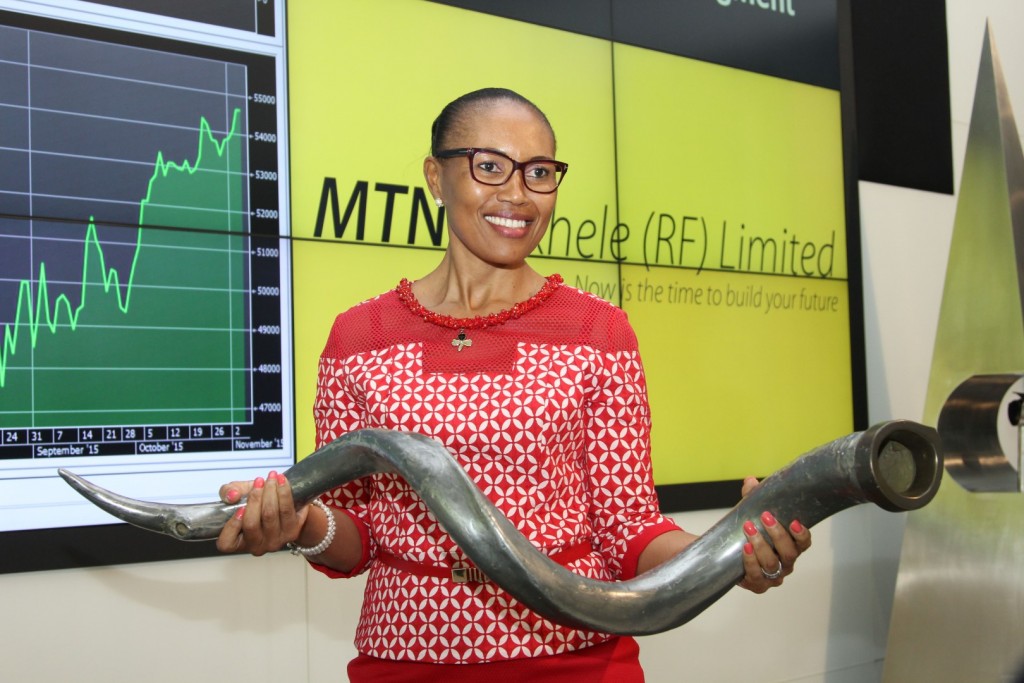
MTN Zakhele Futhi, the special-purpose vehicle designed to broaden black ownership in Africa’s leading mobile operator, has unveiled plans to delist from the Johannesburg Stock Exchange, marking the culmination of its core mandate to facilitate indirect investment in MTN shares by qualifying black individuals. The entity, which holds approximately 77 million MTN shares representing about 4 per cent of the group’s issued capital, announced a firm intention to repurchase all outstanding shares—bar one each retained by key holding entities—at 15 cents per share, reflecting its net asset value of roughly R18.5 million across 123.4 million shares in issue. This move, structured as a scheme of arrangement, aims to distribute remaining value back to investors before dissolution, as the vehicle’s primary function has effectively concluded.
Established in 2016 as part of MTN’s broad-based black economic empowerment initiative, Zakhele Futhi provided a ring-fenced platform for over 300,000 black public participants to gain exposure to the telecom giant without direct shareholding complexities, aligning with South Africa’s post-apartheid equity reforms that have seen BEE transactions exceed R500 billion since 1994. As reported by Business Day, the structure mirrored earlier schemes like the original Zakhele, which unlocked billions for beneficiaries but faced scrutiny amid MTN’s 2023 investigations into alleged irregularities in its empowerment programmes, prompting regulatory probes that cleared the path for orderly wind-downs. In a market where telecom penetration hovers at 170 per cent yet digital inclusion lags for rural black communities—only 45 per cent of whom access broadband per latest stats—these vehicles have been pivotal, though critics note their finite terms often limit long-term wealth creation compared to perpetual models adopted by peers like MultiChoice.
The delisting proposal follows a series of strategic steps to realise value and extend the scheme’s lifespan. Earlier this year, MTN sought to prolong the 2016 BEE arrangement by three years to November 2027, a bid approved amid periodic reviews common in corporate empowerment setups. In June, Zakhele Futhi capitalised on market buoyancy by divesting 23.77 million MTN shares through an accelerated bookbuild, raising R3 billion to bolster liquidity. This paved the way for a mid-July regulatory nod to a R2.5 billion distribution to investors, underscoring the vehicle’s success in amplifying returns—its shares traded at a premium to net asset value for much of its tenure. To ensure compliance with takeover rules, an independent board comprising industry veterans has been appointed to oversee the transaction, safeguarding minority interests in a process that could conclude by early 2026.
This development coincides with robust momentum at MTN Group, which on Monday detailed a stellar third quarter, propelled by standout performances in Nigeria and Ghana. Subscriber numbers surpassed the 300 million milestone for the first time, reflecting a 2.5 per cent year-on-year increase to 295 million active users by September, while the fintech arm’s transaction value ballooned 38 per cent to $342.3 billion (R5.84 trillion), driven by mobile money adoption in underbanked regions. According to TechCentral, service revenue climbed 25.9 per cent to R64.5 billion—or 22.6 per cent in constant currency—outpacing the African telecom sector’s 4.5 per cent growth forecast for 2025, with Nigeria alone contributing 35 per cent of group earnings amid naira stabilisation and data demand surges. Nigeria’s restoration of positive retained income and net equity has also greenlit dividend resumption after a two-year hiatus, injecting fresh capital into empowerment structures like Zakhele Futhi.
As Zakhele Futhi transitions to closure, it exemplifies the evolving landscape of BEE in telecommunications, where finite schemes are giving way to hybrid models blending equity with skills transfer to sustain impact. According to IOL, MTN’s empowerment efforts have distributed over R10 billion in dividends to black beneficiaries since inception, yet ongoing challenges like load shedding—costing the sector R2 billion monthly—and spectrum auctions loom large. For MTN, navigating this wind-down while scaling fintech and 5G rollouts positions it to maintain its 35 per cent pan-African market share, even as delisting streamlines governance. In an industry projected to add 50 million new connections by 2030, Zakhele Futhi’s exit not only returns value but signals a maturing empowerment paradigm, where legacy vehicles pave the way for enduring stakeholder capitalism.