
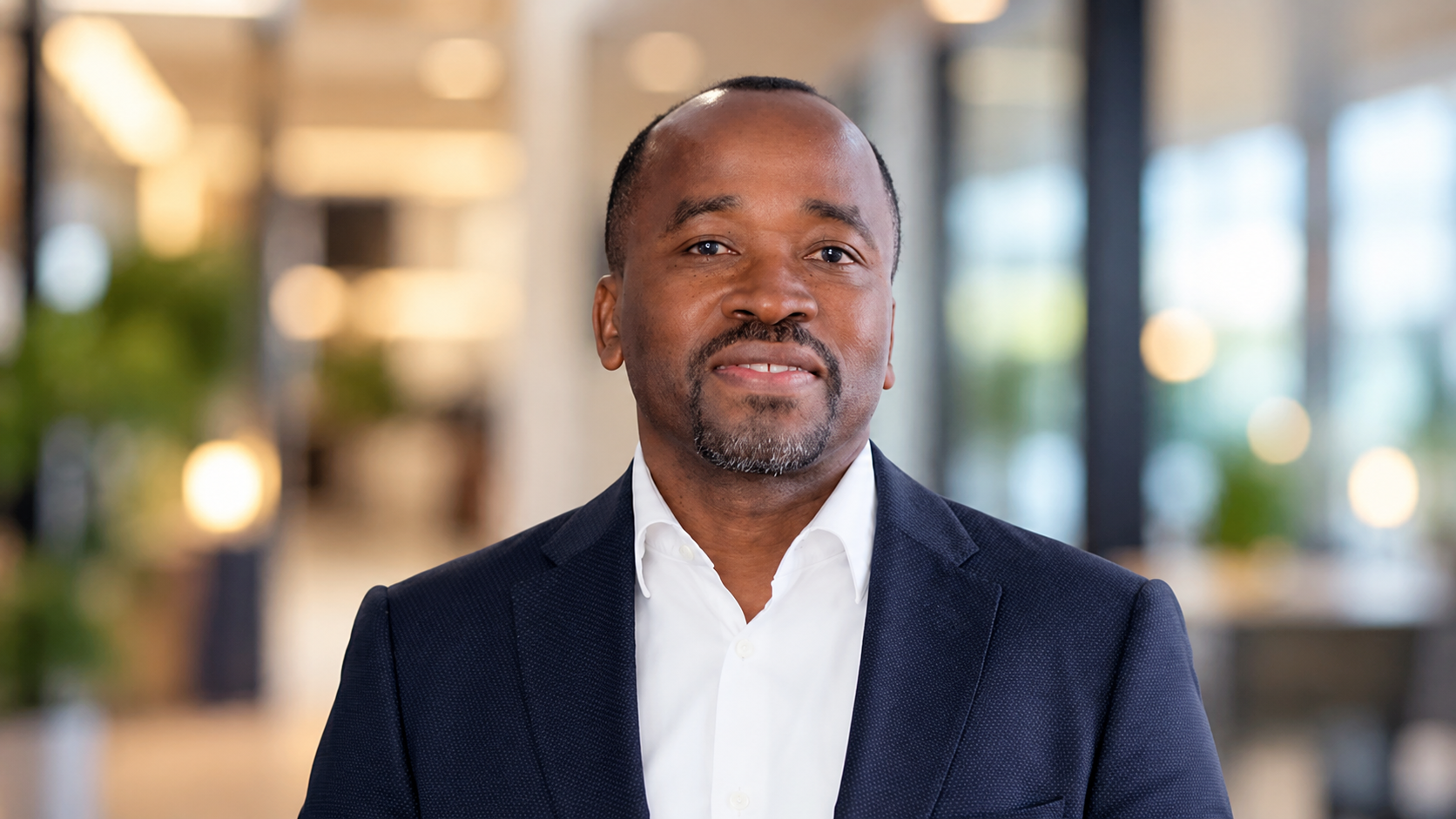
Cassava Technologies president and chief executive Hardy Pemhiwa says Africa risks repeating its history of exporting raw commodities unless it builds its own artificial intelligence (AI) computing capacity and keeps its data on the continent.
Pemhiwa was speaking to Nancy Kacungira, host of Africa Enterprise, at Cassava’s data factory in Johannesburg. The facility is a data centre built to process AI workloads. It connects to a 110,000km fibre network that runs from Cairo to Cape Town, giving the continent an alternative to the long-standing practice of routing much of its digital traffic through Europe.
Pemhiwa said the group’s aim is to build a digital infrastructure and AI computing platform across five of Africa’s largest markets: South Africa, Kenya, Nigeria, Egypt and Morocco. Each country is intended to act as a regional hub, with neighbouring markets connecting to the AI factories Cassava is building there.
| Cassava’s AI build-out | Figure |
|---|---|
| Hub markets | South Africa, Kenya, Nigeria, Egypt, Morocco |
| Fibre network | 110,000km, Cairo to Cape Town |
| Planned investment (2025 announcement) | Up to $720m (R11.9bn) |
| Nvidia GPUs acquired | 12,000 |
| Cost of one GPU | $45,000–$60,000 (R742,000–R989,000) |
| Africa’s share of global data centre capacity | 0.6% |
| Projected African capacity, 2030 | About 1.2GW, triple current levels |
The plan builds on a partnership with Nvidia announced in April 2025, under which Cassava said it could invest as much as $720 million (R11.9 billion) in what it described as Africa’s first AI factory. According to Bloomberg, the first phase was 3,000 Nvidia graphics processing units (GPUs) in South Africa. The full rollout of 12,000 GPUs was planned over three to four years, at a cost of $45,000 to $60,000 (R742,000 to R989,000) per unit. In November 2025 founder and chairman Strive Masiyiwa said the group had acquired the 12,000 GPUs, and Cassava launched a GPU-as-a-service offering. Deployment at its South African data centres began in March 2026.
Pemhiwa said Africa accounts for only about 1% of the world’s data centres, a small share for an economy he put at $3.5 trillion (about R57.7 trillion). Industry figures point to an even thinner base. The Data Centres in Africa 2026 report puts the continent’s share of global capacity at 0.6%. It projects that capacity will roughly triple to about 1.2GW of IT load by 2030.
He argued that relying on foreign AI infrastructure would repeat the pattern seen with coffee, cocoa and minerals. In each case, Africa exported unprocessed raw materials while other economies captured the value from processing them. He said the continent’s data does not need to leave it.
Pemhiwa said the commercial opportunity lies in information that global AI models cannot reach. Those models have been trained on publicly available internet content. They lack the operational records held by companies such as South African platinum and gold miners with three decades of production data, and by major referral hospitals in South Africa, Uganda, Kenya and Zimbabwe. He said that privately held data is Africa’s opportunity.
Asked whether AI could match the impact of mobile money, Pemhiwa said he expects the effect to be about 100 times greater. Mobile money brought people previously excluded from the financial system into it. AI, he said, could include people excluded by language. He pointed to science and maths education, where children often have to learn a foreign language before they can learn the subject, a barrier AI can now remove.
Cassava has already moved in that direction. Its chief operating officer, Ahmed El Beheiry, has said the AI factory will support model development in African languages, starting with Swahili, followed by isiZulu and Afrikaans. The CSIR’s national cyber-infrastructure centre plans to use the facility to extend its partnerships with industry.
The push comes as capital moves into African digital infrastructure. Hyperscalers and technology investors have committed an estimated $2.5 billion to $4 billion (R41.2 billion to R66 billion) to African data centres in recent years. Development finance institutions have added $1.5 billion to $2 billion (R24.7 billion to R33 billion) since 2016.