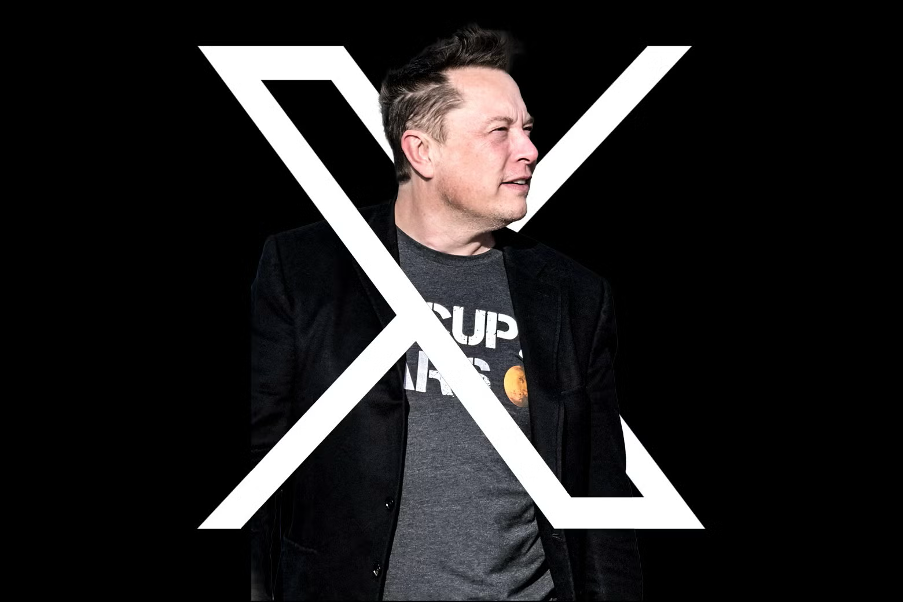
A United States federal judge has permanently dismissed Elon Musk’s X Corp lawsuit against a coalition of major advertisers and an industry body, ruling that the social media platform failed to establish any legally cognisable harm under American antitrust law — closing the door on a case that Musk had framed as existential combat with the advertising industry.
US District Judge Jane Boyle of the Northern District of Texas dismissed the case with prejudice on Thursday, meaning X Corp cannot refile the claims at any future point. The lawsuit, brought by Musk’s X Corp in 2024, alleged that the Belgian-based World Federation of Advertisers and its brand safety initiative, the Global Alliance for Responsible Media (GARM), had orchestrated a massive advertiser boycott that cost the company billions in revenue. Musk also named energy companies Ørsted and Shell, food groups Mars, Nestlé and Tyson, healthcare company CVS, pharmaceutical firm Abbott, Colgate-Palmolive, toy maker Lego and social platform Pinterest as defendants. GARM, whose stated purpose was to help the advertising industry avoid funding illegal or harmful content on digital platforms, was shuttered by the World Federation of Advertisers in August 2024 — days after Musk filed the lawsuit.
In a 56-page written opinion, Boyle found that X had not demonstrated antitrust injury. She noted that the defendants were not alleged to have attempted to prevent X from selling advertising to other companies outside of GARM, nor to have sought to benefit a competing platform. The conspiring advertisers, she wrote, had simply decided not to purchase advertising on X for their own needs — a decision that, however damaging to X’s revenue, did not constitute anti-competitive conduct under federal law. Boyle also dismissed claims against Ørsted and certain international entities of other defendants on jurisdictional grounds, though those dismissals were entered without prejudice. Separately, she denied X the right to appeal her decision.
X Corp had argued throughout the litigation that the advertisers acted against their own economic self-interest in coordinating a withdrawal of spending — a pattern the company said was only explicable as a conspiracy in violation of US antitrust law. The defendants countered that each company had made independent decisions about where to allocate advertising budgets, motivated by their own brand safety concerns rather than any collective agreement, and that X had produced no evidence of specific persons, dates, or communications demonstrating concerted action. Boyle accepted that reasoning, finding the complaint bereft of the factual particularity required to sustain an antitrust claim.
The financial context underlying the case is significant. Within a year of Musk completing his $44 billion acquisition of Twitter in October 2022 and rebranding it as X, advertising revenue had fallen by more than half as major brands paused or reduced spending amid concerns about the platform’s approach to content moderation. Musk had reinstated the accounts of numerous previously banned figures and relaxed content restrictions, prompting brands to reassess the reputational risk of advertising alongside potentially harmful material. The platform’s advertising revenue, which had stood at approximately $4.5 billion in 2021, dropped sharply and has not recovered to pre-acquisition levels.
X claimed in January 2026 that nearly all of its top advertisers had returned to the platform, a claim that sat awkwardly alongside the ongoing litigation. The dismissal with prejudice ends any prospect of X recovering damages through this avenue. The ruling represents a significant legal setback for Musk at a moment when X continues to rebuild its commercial relationships with the advertising industry it spent two years accusing of illegal conduct. Musk’s separate $134 billion lawsuit against OpenAI and Microsoft is due to go to trial on 27 April.