South Africa is at an inflection point. Persistent unemployment, widening inequality and deepening digital exclusion are not abstract policy concerns. They are shaping the life chances of millions of citizens right now.
Statistics South Africa recorded an official unemployment rate of 31.4% in Q4 2025, among the highest in the world. Youth unemployment exceeds 45%, meaning nearly half of young South Africans cannot find work in a formal economy that was never fully designed to include them.
The World Bank consistently ranks South Africa among the most unequal societies globally, with wealth and opportunity still concentrated in a small segment of the population. Digital inequality compounds all of this while the World Bank’s Digital Economy Assessment for South Africa counts over 300 active entrepreneurship support organisations in the country, but only an estimated 10 – 15% specifically target digital entrepreneurs. These challenges are interconnected and they demand a fundamentally different approach to innovation.
Why the old model isn’t working
For too long, innovation has been treated as something that happens in universities, corporate R&D labs or government policy units, and is then delivered to communities. This top-down model produces solutions that are technically sound but socially disconnected. Communities experience the consequences of decisions they had no hand in making.
The Quadruple Helix model offers a more honest alternative. Originally developed in innovation theory, it extends the traditional triple helix of government, industry and academia to include a critical fourth pillar: civil society and communities. The premise, supported by the Organisation for Economic Co-operation and Development (OECD)’s work on inclusive innovation systems, is straightforward. Solutions become more relevant, durable and scalable when the people most affected by a problem are involved in designing the response.
In practice, however, this is harder than it sounds. Institutional silos, fragmented funding and competing priorities regularly prevent meaningful cross-sector partnerships from forming. Convening the right people around the right problems requires deliberate effort and trusted intermediaries.
Communities as co-creators, not beneficiaries
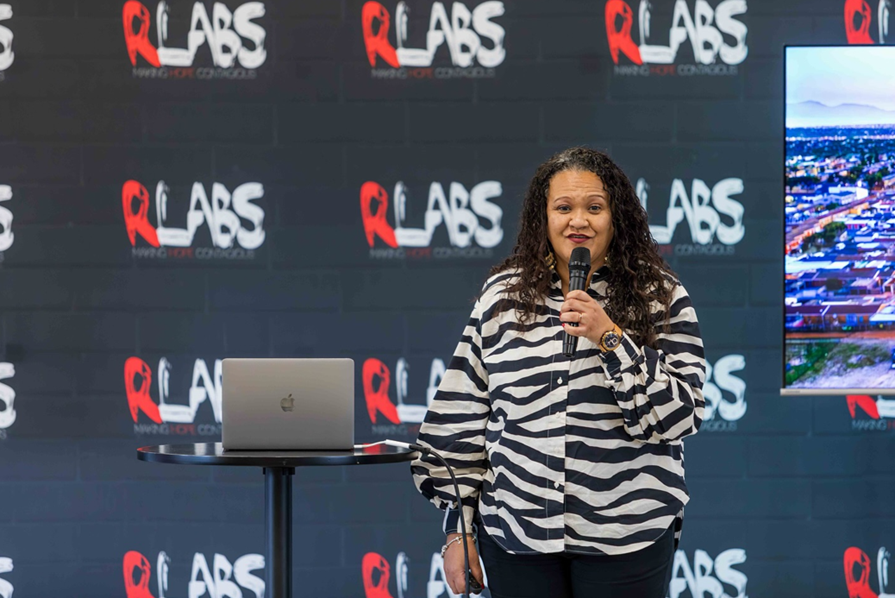
This is the philosophy that has guided RLabs since its founding in Cape Town’s Cape Flats in 2009. What began as a grassroots social innovation initiative has grown into an international network operating across more than 20 countries, running programmes in digital skills, entrepreneurship and community-led innovation. RLabs’ model is grounded in a simple but powerful conviction that innovation must emerge from lived experience. When communities are actively involved in identifying problems and prototyping solutions, the outcomes are not only more appropriate, but they are also more likely to last.
Beyond skills development, RLabs operates as a connector within the broader innovation ecosystem, bridging community members, entrepreneurs, universities, corporations and public institutions around shared challenges. A recent example is RLabs’ partnership with MTN South Africa, launched recently. The initiative, a youth digital empowerment programme in the Western Cape, combines digital training, entrepreneurship support, mentorship and youth expos to create tangible pathways into the digital economy. Participants gain exposure to platforms such as MTN Pulse and MoMo, alongside industry mentors and entrepreneurial networks.
This partnership illustrates the Quadruple Helix in action. MTN contributes technology infrastructure, resources and market reach. RLabs brings grassroots trust, community networks and implementation expertise. Young innovators bring local insight and creative energy. Government policy frameworks enable the whole system. No single actor could produce this outcome alone.
From pilots to lasting impact
One of the most persistent frustrations in social innovation is scale. Promising community initiatives stall because funding dries up, institutional support fades or partnerships fragment. The Quadruple Helix framework addresses this directly by distributing ownership across sectors, it reduces single points of failure and creates the conditions for initiatives to move from pilot to sustained impact. South Africa has the ingredients that include research institutions, a growing tech ecosystem, active civil society organisations and a generation of young people motivated to solve real problems. What is still needed is the architecture to connect them.
Platforms such as SA Innovation Week 2026 are designed to enable exactly this kind of convergence that brings policymakers, entrepreneurs, researchers, investors and community innovators together to work on South Africa’s most pressing challenges. The model is clear. The tools exist. The question is whether institutions are willing to genuinely share the table.
Written by Rene Parker, Board Chair of AfriLabs | Co-Founder & Director, RLabs