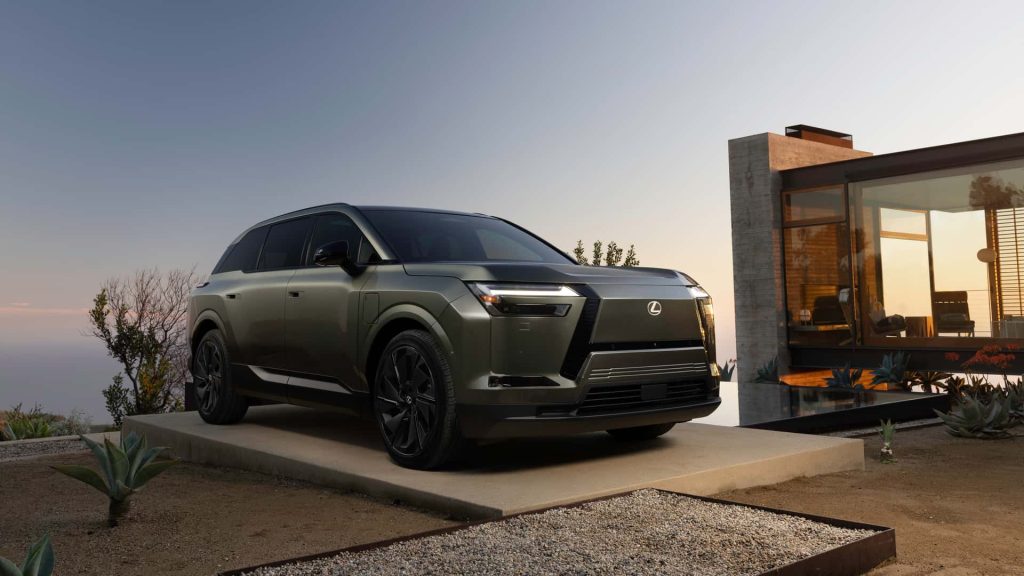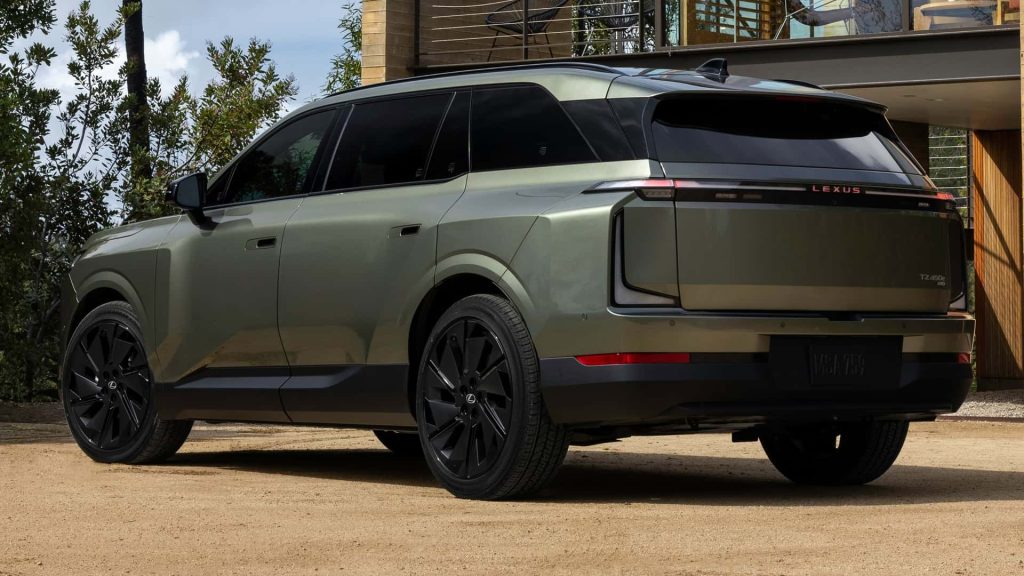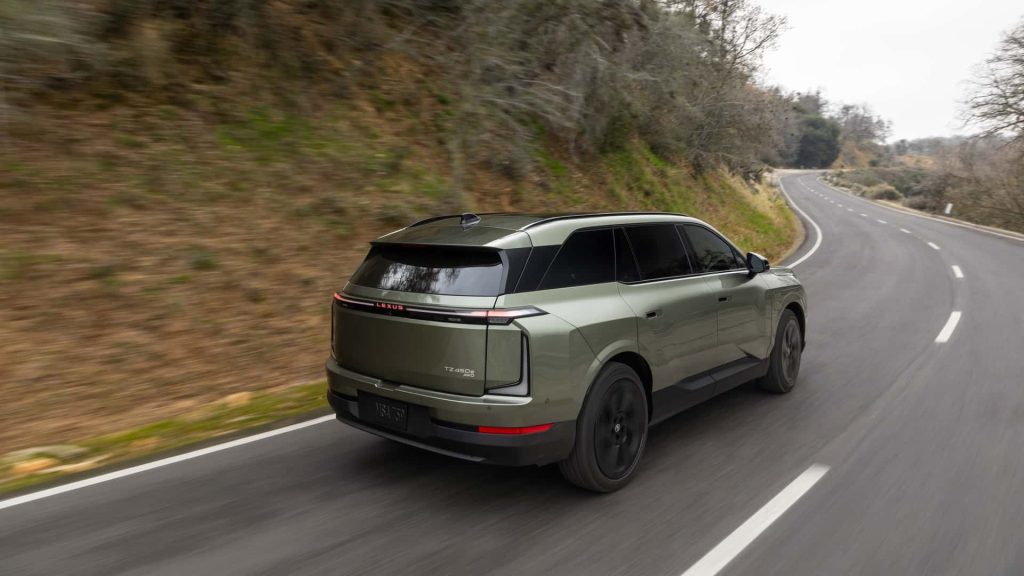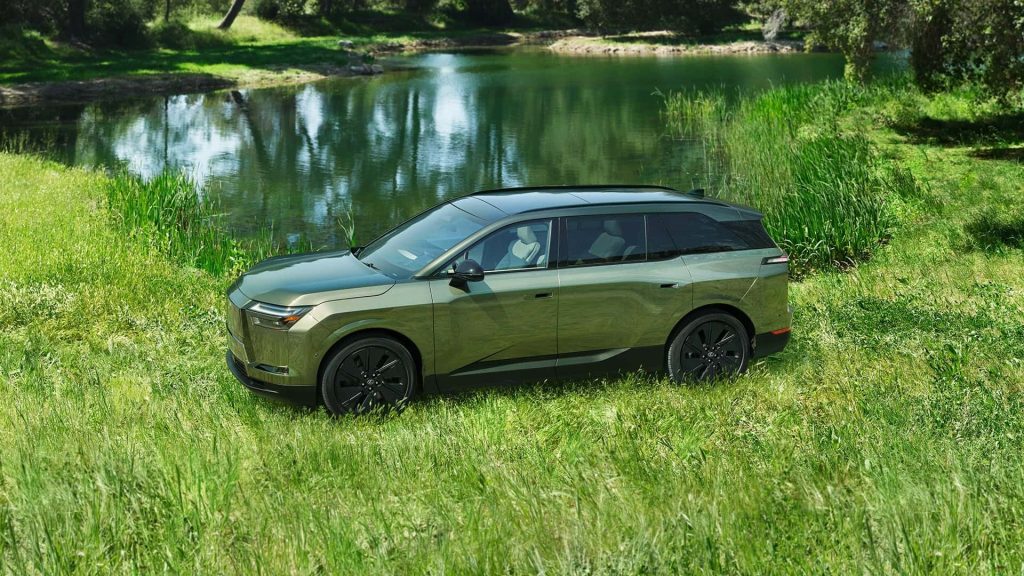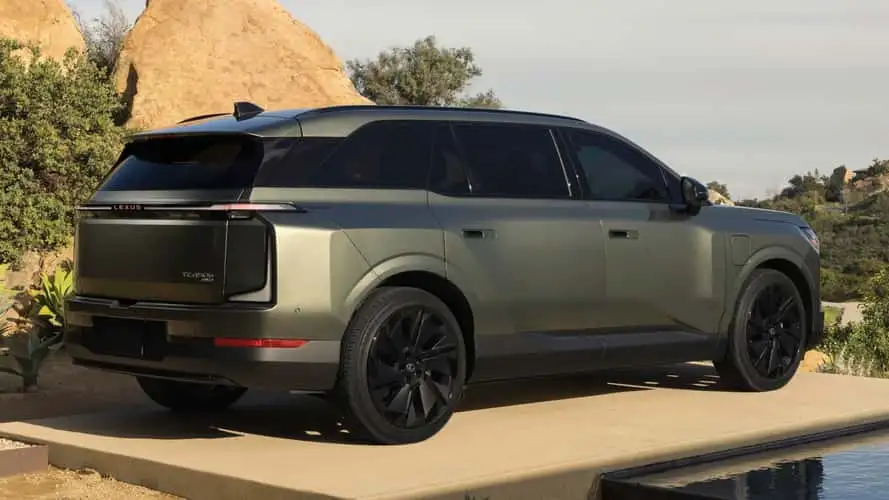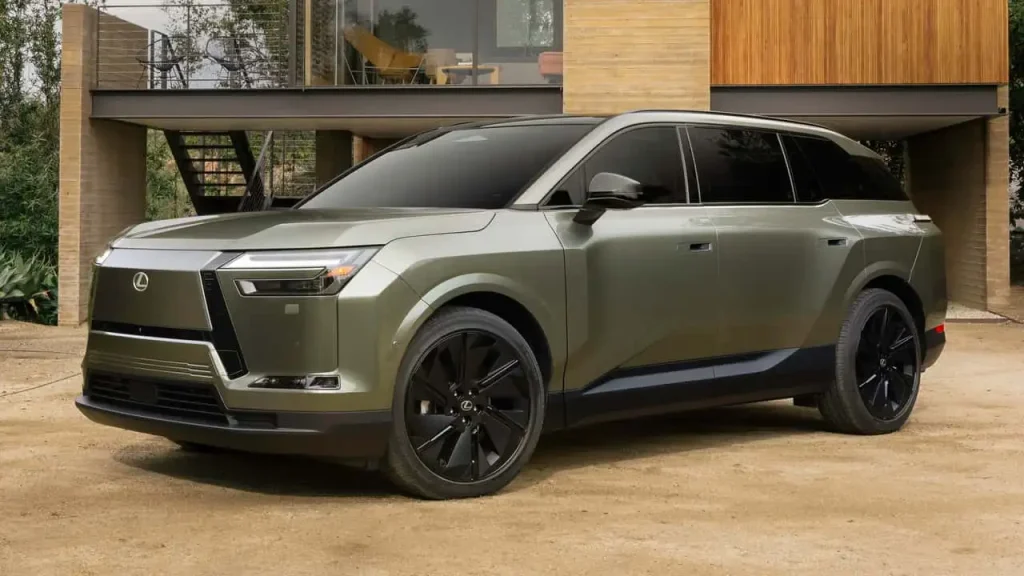

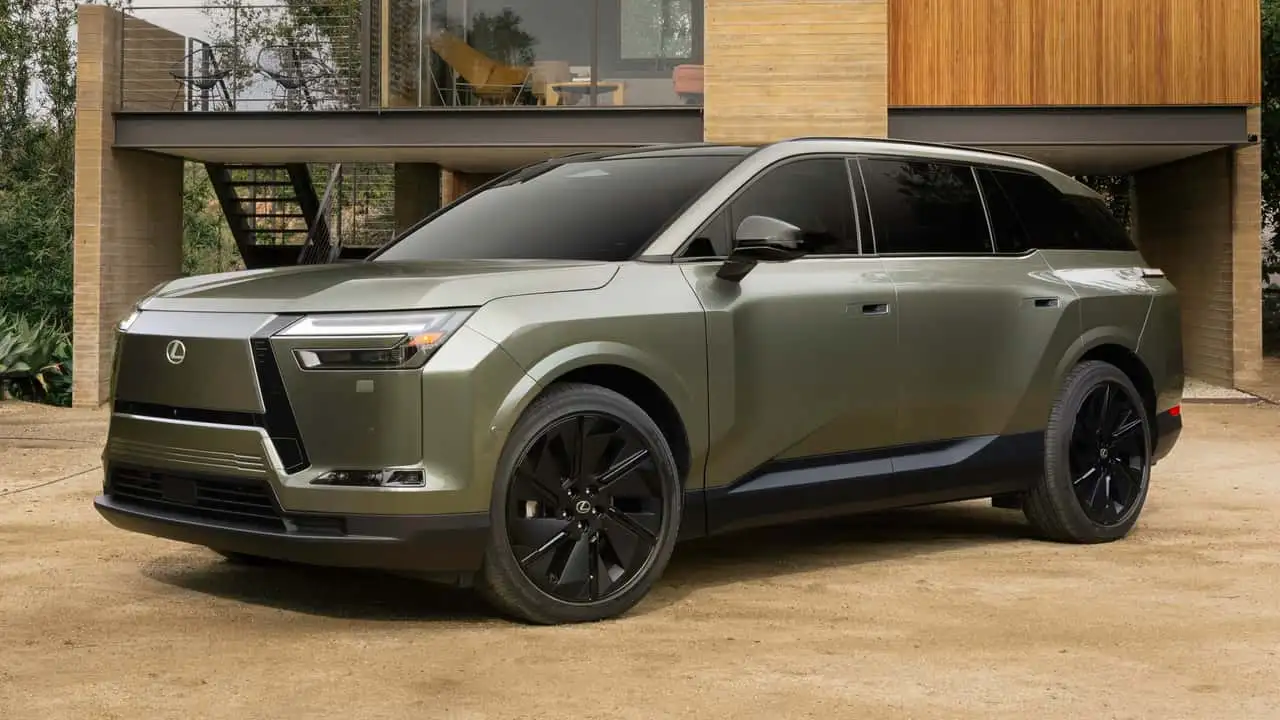
Lexus has entered the three-row electric SUV segment with the debut of the 2027 TZ, a model that sits at the intersection of its luxury ambitions and Toyota’s broader push to reclaim ground in the global electric vehicle market. The TZ is essentially an upscale version of the electric Highlander, marking the first time Toyota’s luxury brand has fielded a three-row electric SUV.
At 200.8 inches long, the six-seat TZ rides on a TNGA platform that has been revised to push the wheels farther outward, creating a wheelbase of 120.1 inches — nearly eight inches longer than the conventionally powered LX. Though it shares its wheelbase and width of 78.3 inches with the Highlander, the TZ is two inches longer overall and sits marginally lower at 67.1 inches.
The drivetrain strategy marks a deliberate split from its mainstream sibling. While Toyota plans to offer the electric Highlander with front-wheel drive in the United States, Lexus will sell the TZ exclusively with a dual-motor, all-wheel-drive configuration. Buyers may choose between 76.96-kWh and 95.82-kWh battery packs, with a claimed range of up to 300 miles. That figure remains an estimate pending EPA certification. The global-specification version produces a preliminary 402 horsepower — 64 more than the dual-motor Highlander — enabling a 0-to-62mph sprint of 5.4 seconds despite a kerb weight of approximately 2,630 kilogrammes.
The TZ achieves a drag coefficient of 0.27, aided by flush door handles, redesigned side mirrors and underbody fins. Two wheel options — 20- or 22-inch alloys wrapped in low-rolling-resistance tyres — will allow buyers to choose between efficiency and appearance.
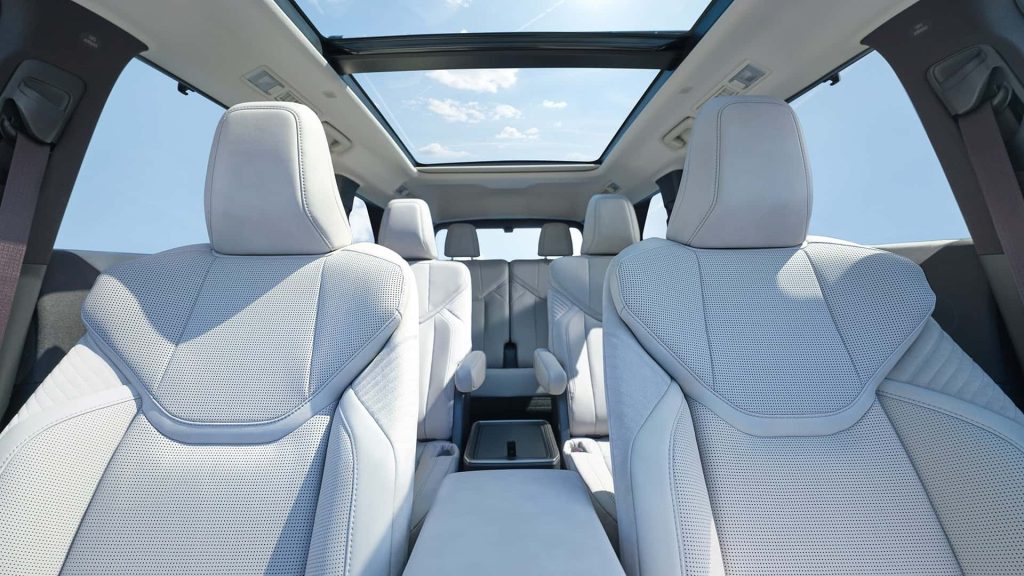
Inside, Lexus has made a concerted effort to distance the TZ from its Toyota origins. The cabin features a potentially extended touchscreen reaching towards the passenger side of the dashboard, ventilated seats and power ottomans for the first two rows, and what Lexus describes as the world’s longest sliding panoramic roof with an electric sunshade. A 21-speaker Mark Levinson audio system is included, along with forged bamboo trim. The third row is said to benefit from the extended wheelbase, with meaningful legroom rarely found at the rearmost position in a production SUV.
The TZ supports fast charging via a NACS port in North America, capable of topping the battery from 10 to 80 per cent in roughly 35 minutes at up to 150 kW.
Perhaps the most unusual feature is the cabin soundtrack. During its official presentation, the TZ was demonstrated playing the engine note of the Lexus LFA’s naturally aspirated V10. Toyota Chief Branding Officer Simon Humphries indicated the sound would be available on demand. It is a bold concession to the emotional dimension of driving — a recognition that even buyers of large electric SUVs may want some theatre behind the wheel.
The TZ enters a market that, in the United States at least, has been cooling, though it is positioned as a global model. It will compete against established players including the Volvo EX90, Mercedes-Benz EQS SUV, Cadillac Vistiq and Rivian R1S. The global three-row electric SUV segment is still forming, but competitive pressure is already intense from both legacy premium brands and newer entrants. Full pricing and specifications are expected closer to the vehicle’s planned US on-sale date before the end of the year.