

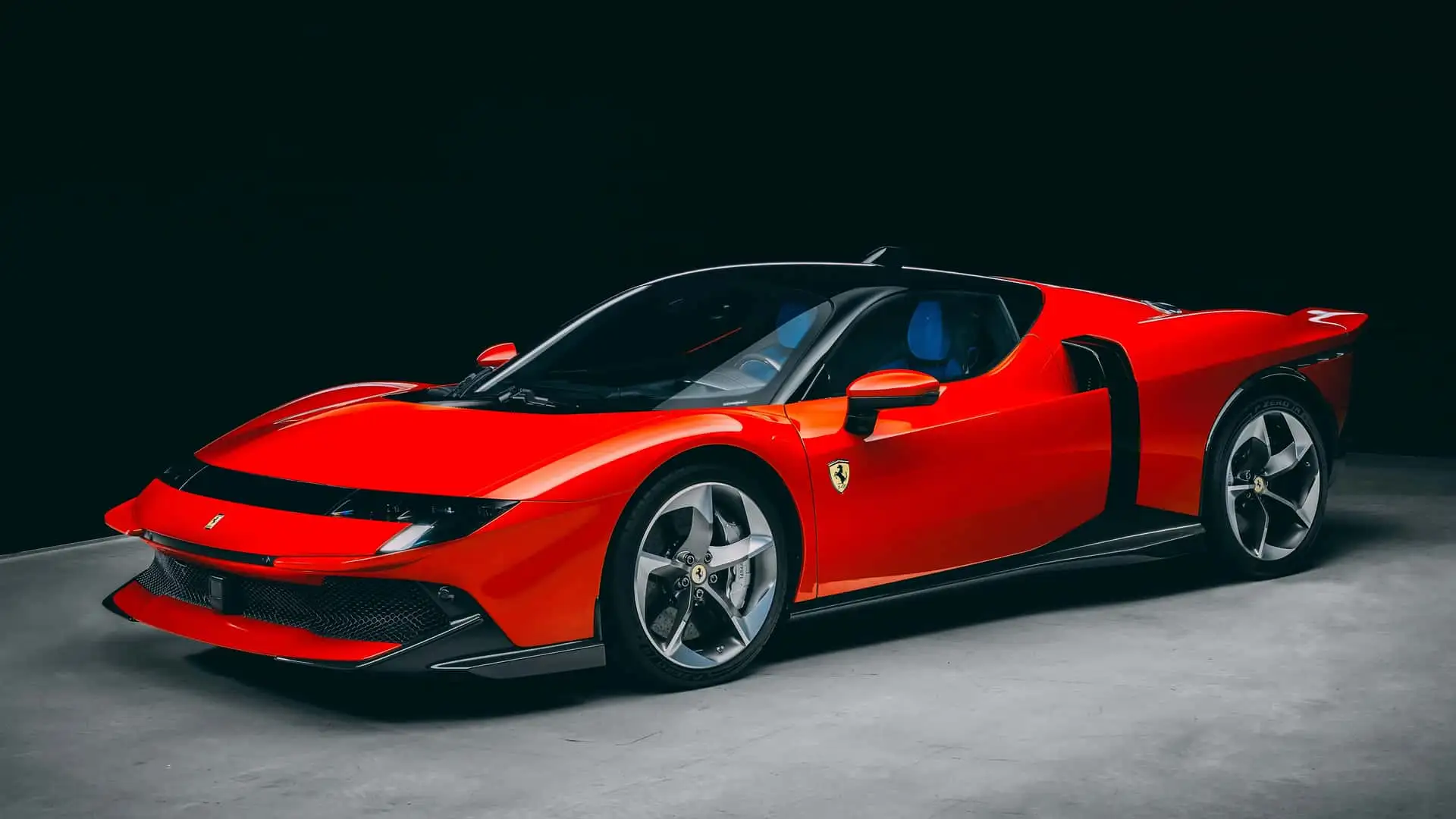
Ferrari has rewarded its Italian workforce with record bonuses after posting stronger earnings in 2025, despite shipping slightly fewer cars than the previous year. The Maranello-based manufacturer increased net revenue by seven percent to €7.1 billion, while operating profit rose 12 percent to €2.1 billion, underscoring the strength of its high-margin business model.
Although deliveries slipped marginally to 13,640 vehicles, just 112 units below the prior year, Ferrari’s financial performance highlights how profitability rather than volume defines success in the ultra-luxury segment. With average transaction prices significantly above those of mass-market brands, margins remain the primary driver of earnings growth.
Chief executive Benedetto Vigna confirmed during the company’s fourth-quarter earnings call that employees in Italy will receive a competitive annual award of up to €14,900, equivalent to roughly $18,000 (R288,000) at current exchange rates. Around 5,000 people are employed by Ferrari in Italy, meaning the payout represents a substantial distribution of value generated during the year.
Ferrari’s order book reinforces its momentum. The company is effectively sold out for 2026 and has already secured most of its 2027 production slots, signalling sustained demand among high-net-worth buyers. Brands at the top end of the market have remained resilient despite broader economic uncertainty, supported by affluent customers less exposed to cyclical pressures.
READ – Ferrari is Building an Electric Car
The product pipeline also reflects a transition period. Ferrari is preparing to unveil its first fully electric model, the Luce, later this year as part of a broader plan to introduce 20 new vehicles by 2030. However, combustion engines will continue to dominate the range through the end of the decade. The company projects that by 2030, 40 percent of sales will come from pure internal combustion models, 40 percent from hybrids and 20 percent from electric vehicles.
This hybrid-heavy mix aligns with broader industry data referenced by Bloomberg, which shows luxury manufacturers adopting gradual electrification strategies to balance regulatory compliance with customer expectations. Ferrari has indicated it will continue refining its V6, V8 and V12 engines to meet tightening emissions standards while delivering higher performance outputs.
With profitability rising, production slots largely allocated for the next two years and a diversified powertrain strategy in place, Ferrari’s financial trajectory suggests continued stability in the near term. If demand remains firm, further employee performance awards are likely to follow.