
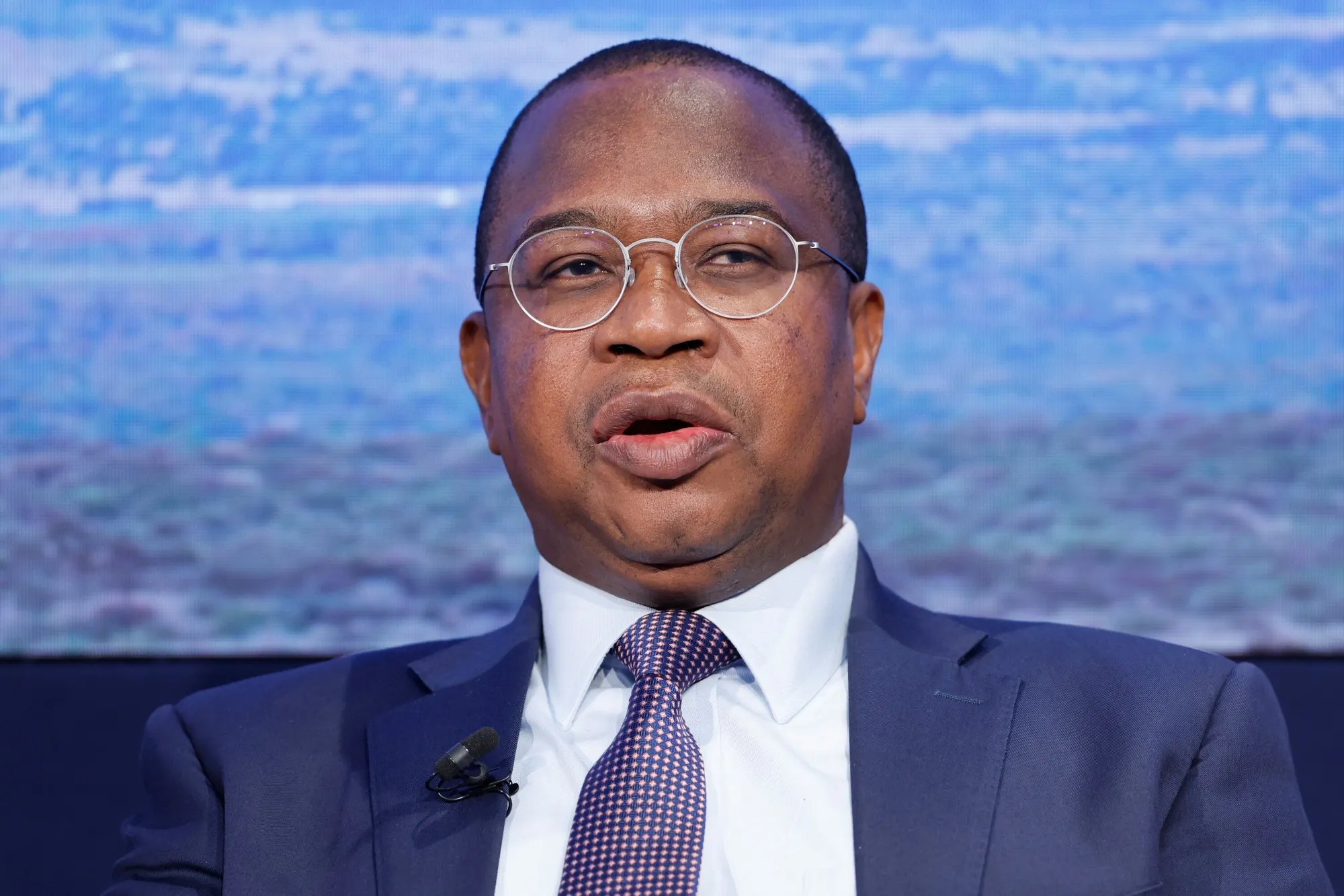
Zimbabwe has stepped up efforts to win international backing for clearing its debt arrears, with Finance Minister Mthuli Ncube leading a delegation to the International Monetary Fund and World Bank annual meetings in Bangkok, Thailand, from 12 to 18 October.
The Ministry of Finance said the delegation met World Bank regional vice-president for Eastern and Southern Africa Ndiame Diop, IMF executive director for Africa Group 1 Adriano Ubisse, and IMF African Department director Zeine Zeidane to discuss economic reforms and the support needed to resolve the country’s outstanding obligations.
Harare is seeking to turn recent gains in macroeconomic stability into a funded path towards arrears clearance and debt restructuring, which would restore access to concessional development finance. The ministry said the meetings acknowledged progress in the form of single-digit inflation, a stable exchange rate and stronger revenue collection.
Zimbabwe’s Debt Position
| Measure | Amount |
|---|---|
| Total public debt | About $23.4bn (R386bn) |
| Total external arrears (estimate) | About $7.4bn to $7.7bn (R122bn to R127bn) |
| Arrears to IMF, World Bank and AfDB | About $2.7bn (R44.6bn) |
| IMF growth forecast, 2026 | 5% Sources: IMF, Equity Axis, The Herald; rand at R16.50/$ |
Zimbabwe has been in default and largely shut out of international capital markets and official lending for more than 25 years, following sovereign defaults around 1999 and 2000 and the build-up of arrears to the IMF, World Bank and African Development Bank. The IMF has said it cannot provide a funded programme until those arrears are cleared. The lack of affordable long-term finance has limited the government’s ability to fund development programmes, contain budget deficits and provide social safety nets.
A 10-month IMF Staff-Monitored Programme (SMP), which took effect on 1 March 2026, sits at the centre of the re-engagement effort. Unlike a lending arrangement, an SMP is an informal agreement under which IMF staff track a country’s reforms without providing money. It is meant to build a record of policy delivery that can support talks with creditors.
The IMF completed its first review of the programme in late July, saying Zimbabwe had met all quantitative targets and structural benchmarks through the end of March 2026. It projects economic growth of 5% this year, easing to an average of 4.2% over the medium term.
The government’s arrears clearance and debt resolution roadmap has two phases. The first involves completing the SMP while raising funds to clear about $2.7 billion (about R44.6 billion) owed to the three main international lenders. The second would follow approval of a full IMF financing programme and end with restructuring agreements with bilateral creditors.
Estimates of the overall debt burden vary. Total public debt stands at about $23.4 billion (about R386 billion), with external arrears put at between $7.4 billion and $7.7 billion. Success under the SMP is expected to position Zimbabwe for an upper credit tranche IMF programme, the first funded arrangement since the late 1990s.