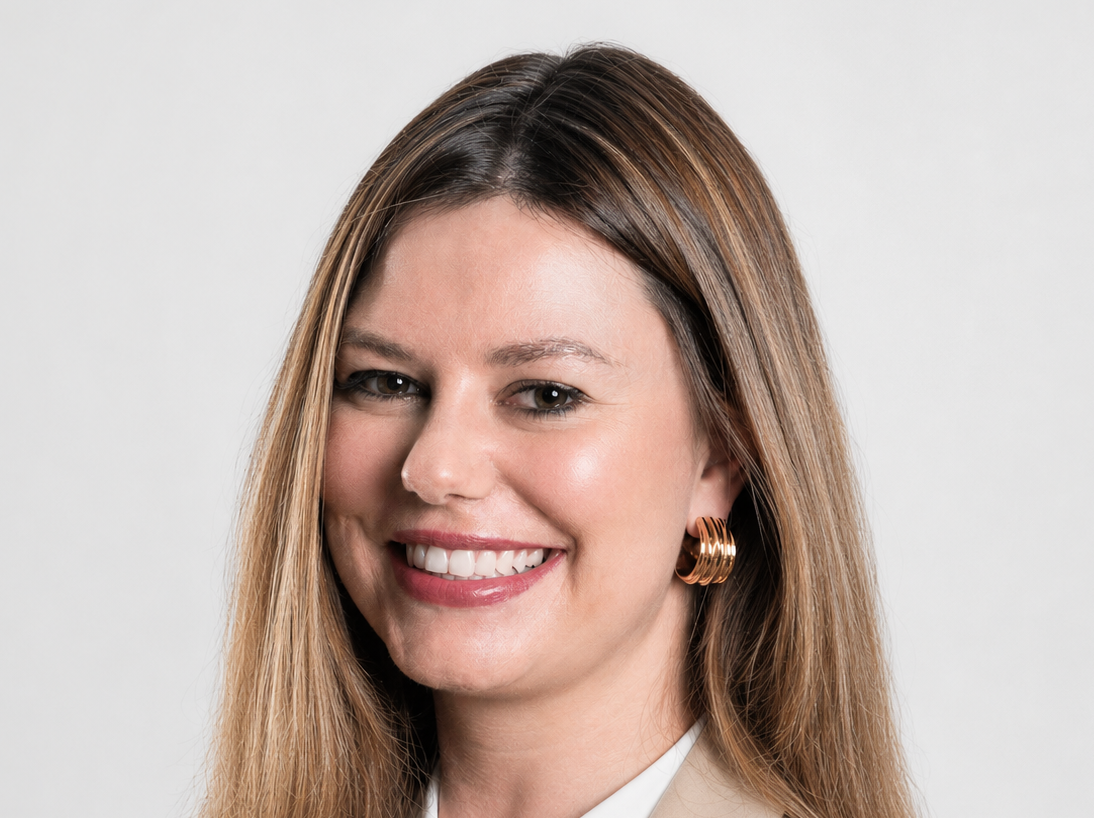
When Milandi Hugo joined the PSG graduate programme in 2016, she could not have predicted that a background in industrial engineering would one day lead her to head up Human Resources for one of South Africa’s leading financial services groups. Yet, ten years later, that is exactly how her career has panned out.
“A financial services business wasn’t even on my radar,” admits Hugo. “I didn’t think it would be a suitable fit for someone with my background.”
That changed when current Head of Transformation at PSG Financial Services, Janine Johannes, put her in touch with the firm and she met with CEO, Francois Gouws, who helped her see the opportunity differently. “He shared the idea that a financial services business also operates like a factory, with systems, processes and flow. That resonated with me because it connected directly to my engineering background and everything I already knew and loved.”
It was this unconventional fit that appealed to Hugo most. “PSG genuinely wanted different types of people working in the financial services industry, and I knew I wanted to be a part of it.”
In the early part of her career, Hugo’s work was focused on the front end of client experience. She was involved in strategic projects, operationalising ideas, and finding ways to improve how things ran. At that stage, her aspirations were centred on delivery: solving problems, driving projects, and making a tangible difference on the client-facing side of the business.
Over time, however, her understanding of what drives client experience began to evolve. “I came to realise that the back end is just as powerful when it comes to client experience, because the experience we create from within, for our own employees and staff, is what ultimately drives the successful delivery of those strategic projects on the front end.”
That realisation drew her towards the people side of the business. For Hugo, the question became: how do you make the lives of employees easier so that they can truly excel in their work?
The move into HR may have seemed like a major pivot, but Hugo’s engineering background proved highly transferable. “My background gave me a way of thinking rather than just a technical toolkit; systems thinking, structured problem-solving, and the ability to break a complex challenge into manageable parts. Those translate directly into building HR strategies, frameworks and processes that genuinely work.”
As for finding the confidence to make such a pivot, Hugo says it came from being trusted. “The people I worked with backed me to get the job done, not so much by what they said, but by the responsibility they handed me. That trust was empowering.”
While many professionals are encouraged to move between organisations to advance their careers, Hugo has built her entire professional journey within PSG. What has kept her growing, she says, is the ownership and opportunity the business has continued to offer.
“No matter your role or age, when you’re given a responsibility, you’re expected to own it. That ownership keeps you invested and genuinely interested. There’s never a dull moment, and you truly feel that you’re adding value.”
For Hugo, one of the greatest advantages of building a long-term career within one organisation is depth. Over time, she has developed a strong understanding of the business, its people and how everything connects. “Staying isn’t standing still; it’s building something with real roots, and that has been one of the biggest accelerators of my career.”
As she has moved into senior leadership, first as Head of Engineering in 2019 and later into her current HR role, Hugo says the biggest mindset shift has been moving from solving problems herself to enabling others to solve them.
“Early on, your value is measured by what you personally deliver. In leadership, it’s measured by what you make possible for others,” she says. “Developing people isn’t separate from the strategy, it is the strategy, because nothing gets delivered without capable, motivated people behind it.”
Hugo’s advice to young women entering the workplace – particularly those who may not have a clear idea of where their careers will ultimately lead – is practical: “Stay the course, put your hand up before you feel fully ready, and let your work speak for itself.
“Focus on outcomes, do what you say you’ll do, and let your results build your credibility over time. You don’t need certainty about where your career will end up; you need the discipline to keep delivering and the resilience to keep going,” she concludes.