
Having enough capital to buy a franchise does not necessarily mean an applicant is ready to run a successful business.
The purchase price is only the first financial hurdle. Prospective franchisees also need to consider the running costs, the operational demands, and whether they have the capacity to manage the pressures that come with building the business.
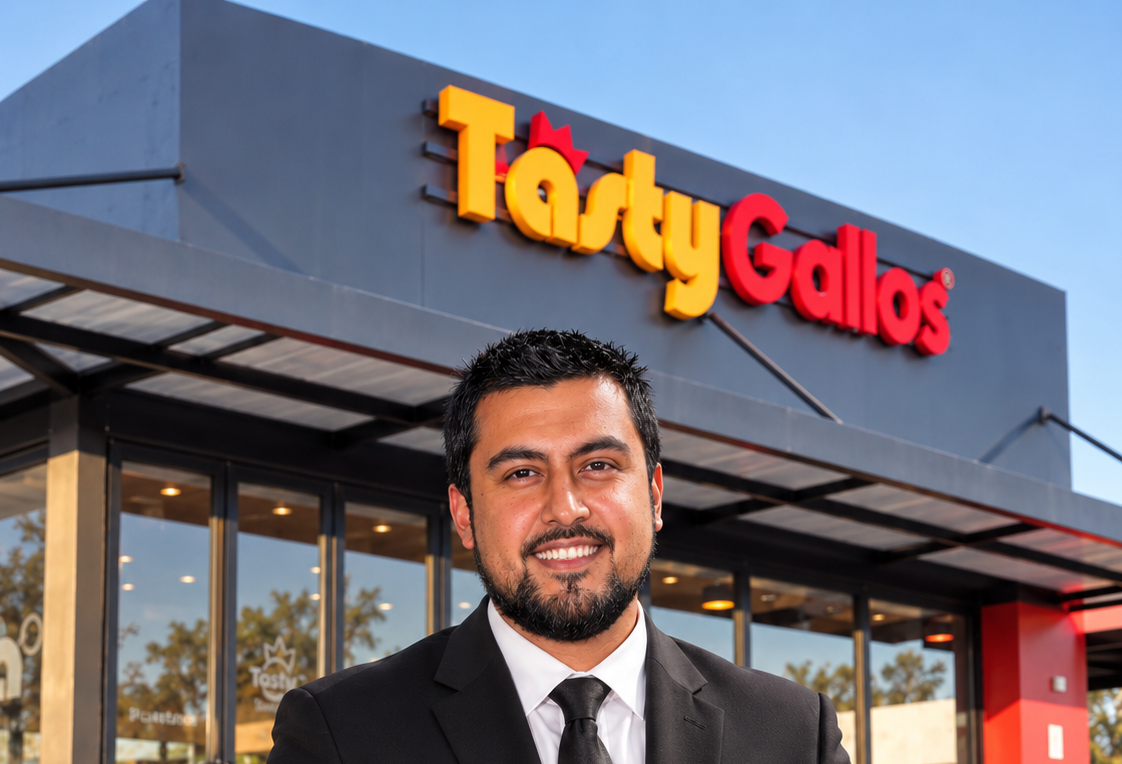
Muhammed Gutta, founder and CEO of South African chicken franchise Tasty Gallos, says these considerations have become central to the way the business assesses prospective franchisees.
“Anyone can sell you a restaurant, especially an established franchised business. I want to know whether you’ll still be running it in five years, because that’s what makes the franchise sustainable,” says Gutta.
Tasty Gallos requires prospective franchisees to have R1.35 million in unencumbered cash available for the investment. However, meeting that financial requirement does not automatically result in approval. Approval also depends on whether the applicant appears equipped to sustain the business once trading begins.
The distinction matters in a market where entrepreneurial interest is rising without the same growth in established businesses. According to the Global Entrepreneurship Monitor (GEM), early-stage entrepreneurial activity in South Africa increased from 11% of adults in 2023 to 15% in 2025. Over the same period, established business ownership declined from 6% to 4%.
That gap highlights the difference between getting into business and staying there – and in franchising, getting that equation wrong can have consequences for both sides. For franchisees, failure can mean losing a significant investment. For franchisors, it can create additional management demands, reputational damage, weaker confidence in the network, and more difficult expansion.
That makes it important to establish upfront whether the franchise genuinely fits the buyer’s goals and expectations, rather than simply being viewed as a route to quick returns.
Three questions every prospective franchisee should answer before signing
For prospective franchisees, Gutta points to three simple questions worth answering before signing an agreement:
- How much financial runway will you have after buying the franchise?
The initial investment is only part of the financial commitment. Franchisees also need enough working capital to cover operating expenses and unexpected costs, while allowing the business time to establish itself before they depend on it for a personal income.
Tasty Gallos learnt this through experience. The business initially placed greater emphasis on whether prospective franchisees could afford the investment, but found that capital alone was a poor predictor of long-term performance. Some owners drew too much from the business too early or expected returns sooner than the operation could realistically deliver.
Prospective buyers should therefore consider not only whether they can afford to open the business, but whether they can afford to support both themselves and the operation before it reaches a sustainable level of profitability.
- How involved are you prepared to be?
Funding the restaurant is different from running it. Gutta says some operators struggled because they were too removed from day-to-day management to identify and address operational problems early.
“Having the money tells me you can open the restaurant. But what matters is whether you can make the most of the opportunity once the doors are open.”
- Are you buying a business to run yourself, or an investment to be managed?
For investors who do not want to be involved in the day-to-day running of a restaurant, different management structures may be possible. In selected cases, Tasty Gallos may manage a restaurant on behalf of its owner for a fixed monthly fee, while the franchisee retains ownership. The important point is that prospective buyers understand upfront who will be responsible for operating the business and what that arrangement will cost, notes Gutta.
Ultimately, he says affordability is only one test of whether someone is ready for franchise ownership.
“Our business interests have to be aligned. I don’t want someone to open a Tasty Gallos for six months or a year. I want them to build a business that is still successful years from now, because if they succeed, we succeed.”