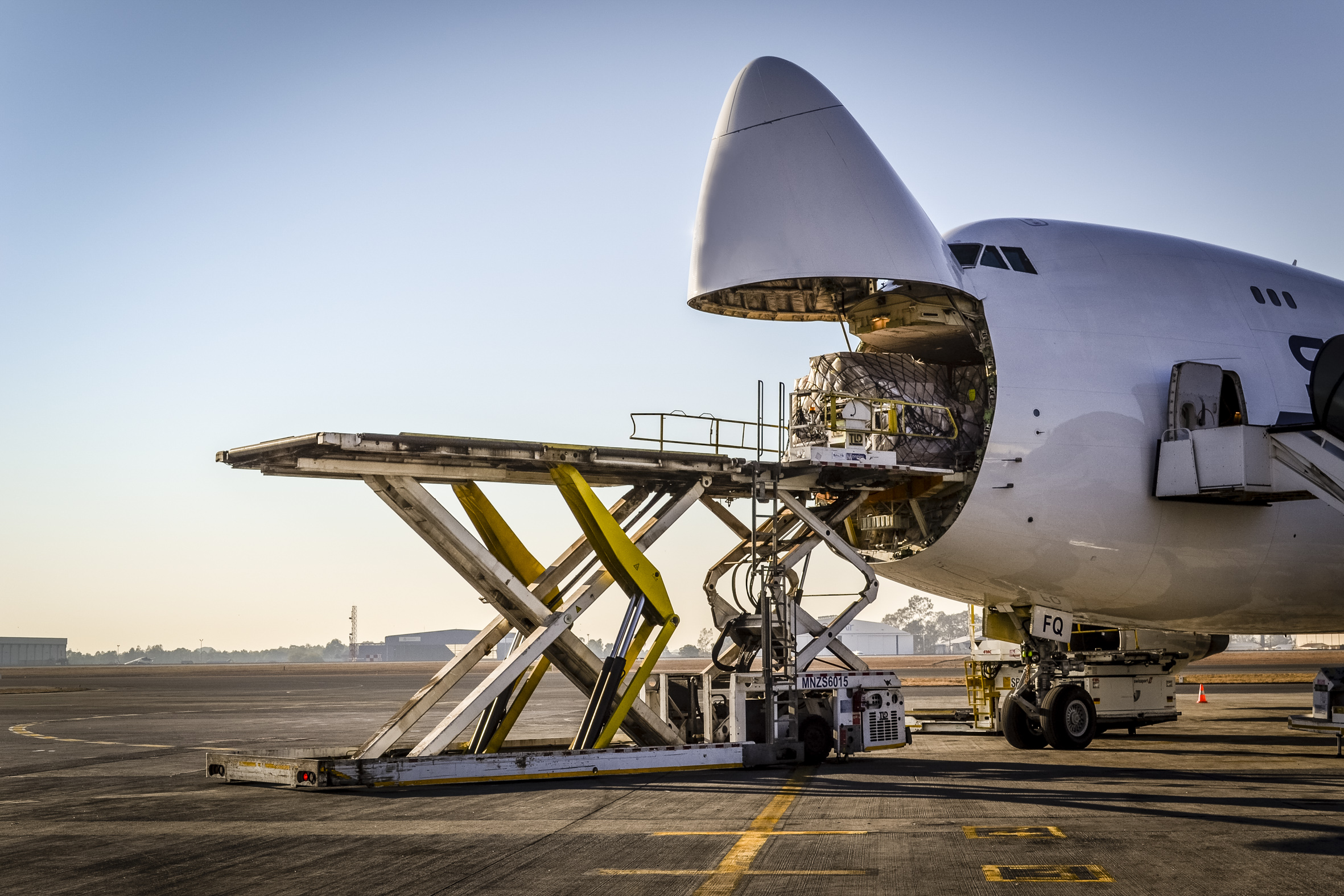
Global air cargo demand recorded an 11.2% year-on-year increase in February 2026, according to data released by the International Air Transport Association (Iata) on 30 March. The growth, measured in cargo tonne-kilometres (CTK), was observed across all major regions, with African carriers posting the strongest performance. Capacity, measured in available cargo tonne-kilometres (ACTK), rose by 8.5% compared to February 2025, while international operations saw demand increase by 11.6% and capacity by 9.8%. The figures reflect a sector that entered 2026 with considerable momentum, though the outbreak of war in the Middle East at the end of February has introduced profound uncertainty.
Willie Walsh, Iata’s director general, noted that even accounting for the demand boost from goods moving ahead of the Lunar New Year, the month demonstrated strong underlying growth. However, he cautioned that the war has triggered sharply rising fuel costs, fuel scarcity in parts of the world, and severe disruption to key cargo hubs in the Gulf, all of which represent major shifts to the operating environment. Walsh added that while air cargo has repeatedly proven its resilience in the face of disruption, an early resolution to the conflict along with a normalisation of fuel supply and costs would be in everybody’s interest.
Several indicators in the broader operating environment supported the February performance. Global goods trade grew by 5.2% year-on-year in January, while jet fuel prices rose 1.2% year-on-year in February, though a widening Brent-jet fuel crack spread highlighted continued volatility in refining margins. Manufacturing sentiment strengthened globally, with the Purchasing Managers’ Index (PMI) rising to 53.1, comfortably above the 50-point expansion threshold. The PMI for new export orders climbed to 51.4, the highest level since July 2021, signalling positive conditions for air cargo demand.
READ – Rail and Airport Blueprints Open for Public Scrutiny
Regional performance varied significantly. African airlines recorded the strongest growth of any region, with demand surging 21.0% year-on-year in February, supported by a 17.3% increase in capacity. Middle Eastern carriers also posted robust figures, with demand rising 16.5% year-on-year and capacity up 13.5%, though this data was collected before the full impact of the Gulf hub disruptions became apparent. Asia-Pacific airlines saw demand grow by 13.6% on capacity expansion of 10.1%, while North American carriers recorded a 9.4% increase in demand on 5.3% capacity growth. European carriers posted a more modest 6.9% demand increase on 6.1% capacity growth. Latin American and Caribbean carriers recorded the weakest performance of all regions, with demand rising just 0.7% year-on-year despite a 4.5% capacity increase.
The trade lane data revealed even more dramatic trends. The Africa-Asia corridor recorded extraordinary growth of 61.9% year-on-year, marking eight consecutive months of expansion, though this lane accounts for only 1.3% of industry-wide cargo tonne-kilometres. The Middle East-Asia lane grew by 24.0%, extending a 12-month streak of consecutive growth and representing 7.4% of the market. The Europe-Asia corridor, which holds a 21.5% market share, grew by 13.1% and has now expanded for 36 consecutive months. Within Asia, demand rose 9.1% on 28 consecutive months of growth, capturing a 7.3% market share. The Asia-North America lane, the largest single trade corridor with a 23.4% market share, grew by 9.1%. The Europe-Middle East lane expanded by 9.3% over two consecutive months, holding a 5.2% share, while the Europe-North America corridor grew by 5.7% over 25 consecutive months, representing 13.5% of the market. Within Europe, demand rose 7.8% on a 1.9% market share.
Dubai, Doha, and Abu Dhabi collectively handle approximately 30% of all air freight transiting between Asia, Europe, and Africa, and any sustained disruption to their operations forces carriers onto longer, less efficient routings or drives modal shift toward ocean freight. The combination of higher fuel costs, re-routing, and insurance premiums is expected to pressure yields in the coming months, even as demand fundamentals remain positive.
February’s performance builds on a record-setting 2025 for air cargo. Iata previously reported that global air cargo volumes reached an all-time high last year, driven by e-commerce expansion from Chinese retailers and sustained demand for high-value and time-sensitive goods. The Lunar New Year effect in February 2026 was amplified by front-loading of shipments ahead of factory closures in China, a pattern that may have pulled some March demand forward. The outlook for the remainder of 2026 remains highly contingent on the duration and intensity of the Middle East conflict. While manufacturing sentiment and goods trade indicators point to continued demand strength, fuel scarcity and hub disruptions are operational constraints that cannot be resolved quickly. The Africa-Asia lane’s 62% surge suggests that shippers are already seeking alternative routing, but whether other corridors can absorb similar volumes without capacity constraints remains an open question.
READ – Government’s Plan to Revive South Africa’s Rail System