

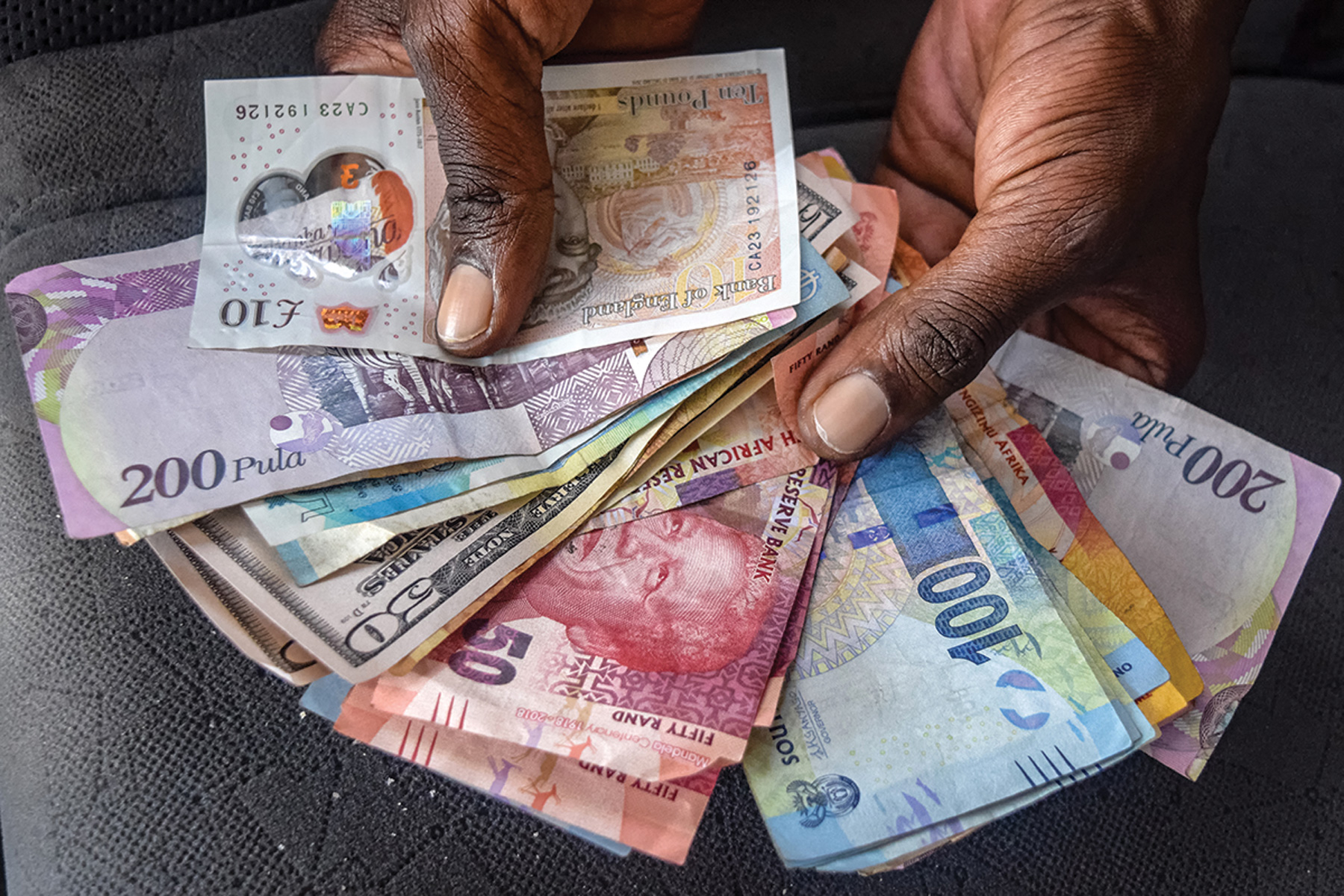
Botswana’s pula continued to weaken against the South African rand through late 2025, intensifying concern among economists that official exchange rates may not fully capture pressures in the foreign exchange market. Data released by the Bank of Botswana show the pula depreciated by 0.9 per cent against the rand in the fourth quarter, ending the year at ZAR1.29 to BWP1.00 compared with ZAR1.3094 at the end of the previous quarter. Over the same period, the currency showed limited movement against the US dollar, slipping marginally from P13.32 to P13.33.
The divergence between official pricing and market sentiment reflects broader regional dynamics, as Botswana’s economy remains closely tied to South Africa through trade and financial flows. According to the Bank of Botswana, the central bank continues to monitor exchange rate developments as part of its mandate to preserve currency stability and manage imported inflation risks. South Africa accounts for a large share of Botswana’s imports, meaning fluctuations in the rand have a direct effect on domestic prices and competitiveness.
READ – Standard Chartered Offers Full Botswana Business for Sale
Currency analysts note that sustained pressure on the pula comes amid uneven growth conditions in the Southern African region and persistent demand for hard currency. As reported by Reuters, several emerging market currencies have faced volatility linked to shifting global capital flows and commodity price movements, trends that tend to spill over into smaller regional markets. For Botswana, maintaining exchange rate stability remains central to monetary policy, particularly as authorities balance inflation control with the need to support economic activity in a challenging external environment.