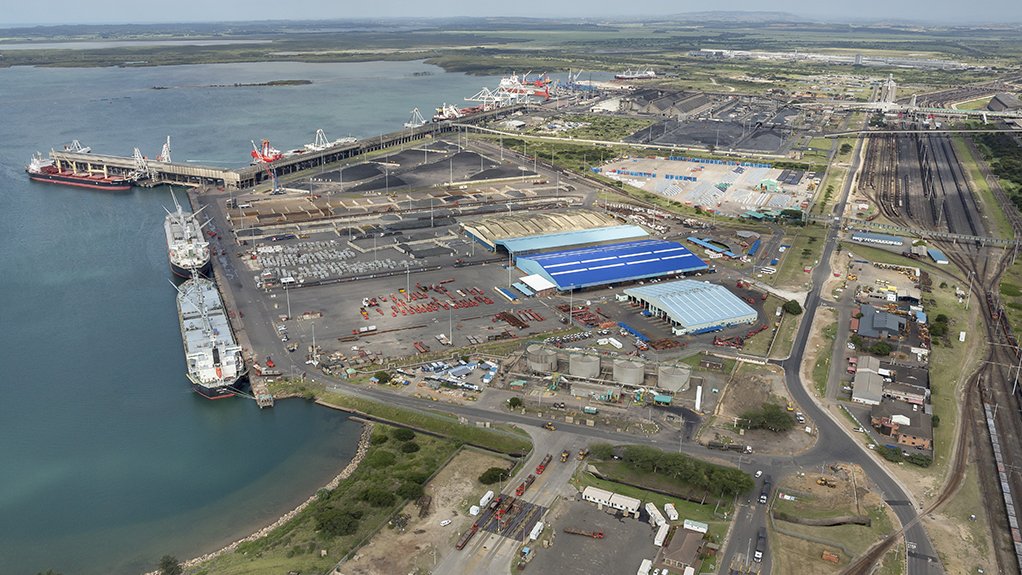
Transnet is preparing to issue requests for proposals for three major private sector participation projects in 2026, marking a significant step in South Africa’s freight reform drive. Transport Minister Barbara Creecy said an RFP for the Richards Bay Dry Bulk Terminal is expected to be released in February, with further concessions for the Ngqura manganese export corridor and the main container corridor to follow later in the year.
The Richards Bay concession is structured as a 25-year partnership aimed at expanding capacity from 18.5 million tons to 26.9 million tons. The project seeks to strengthen the terminal’s position as a leading bulk export hub on the east coast, supporting coal and mineral exports that remain central to South Africa’s trade balance.
The Ngqura manganese corridor concession is intended to consolidate exports through a new 12-million-ton bulk terminal at the Port of Ngqura, combined with rail upgrades from the Northern Cape. Beyond logistics efficiency, the project is designed to address longstanding environmental concerns, including manganese dust affecting communities in Gqeberha.
The container corridor project, linking Johannesburg and Durban, targets operational underperformance in South Africa’s primary freight artery. A 25-year concession model is expected to mobilise private investment and operational expertise while maintaining public ownership. Limited state funding for infrastructure upgrades has heightened the need for private capital to restore rail reliability and port efficiency.
Freight bottlenecks have weighed heavily on economic output. Logistics constraints have contributed to subdued export volumes and rising transport costs over recent years, affecting sectors such as mining and agriculture. Industry estimates suggest that rail underperformance has cost the economy billions in lost export revenue annually.
The reform push aligns with commitments outlined during President Cyril Ramaphosa’s State of the Nation Address, where public-private partnerships were positioned as central to revitalising ports and rail corridors. A recent agreement with an international operator to manage Durban’s Pier 2 terminal was cited as a precedent for further concessions.
Creecy also confirmed that her department is assessing investor appetite for commuter and rapid regional rail projects, including potential high-speed corridors linking Gauteng with Musina, Mbombela and eThekwini. While funding models remain under review, the broader strategy reflects an attempt to reposition rail as a catalyst for economic recovery and regional integration.