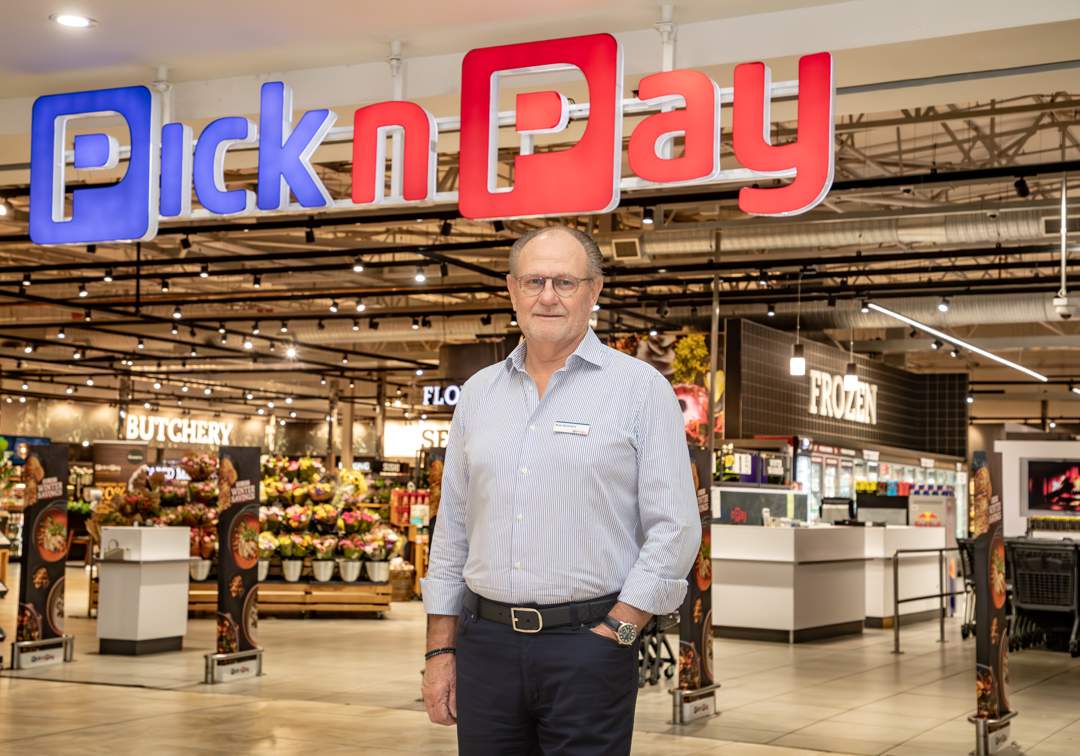
Pick n Pay lifted group turnover by 2.7% in the first five months of its financial year, with a 37.5% surge in online sales and a recovering clothing division offering evidence that its multi-year turnaround is gaining traction, even as trading conditions stay difficult and a contentious labour process remains unresolved.
For the 20 weeks to 19 July, like-for-like growth across the group reached 2.5%. Within the core Pick n Pay segment, like-for-like sales rose 2.6% while turnover was flat year on year. The South African arm grew like-for-like sales 1.9%, though turnover slipped 0.4%, a decline the group attributed to the completed closure or conversion of underperforming company-owned supermarkets rather than weakening demand. That distinction matters, since the estate rationalisation is a deliberate plank of the recovery plan rather than a symptom of decline.
READ – Pick n Pay Unveils Penny in AI Battle for Grocery Shoppers
The clearest momentum came from Boxer, the discount chain spun out of the parent in 2024 and separately listed on the JSE. Boxer grew turnover 7.2% and 2.2% on a like-for-like basis, continuing to take market share in a constrained economy. The pace, however, has cooled from the 10.9% expansion recorded in the second half of its 2026 financial year, a deceleration that underlines how even the group’s strongest performer is not immune to weak consumer spending.
| Pick n Pay | 20 weeks to 19 July |
|---|---|
| Group turnover growth | +2.7% |
| Group like-for-like | +2.5% |
| PnP segment like-for-like | +2.6% |
| PnP SA like-for-like | +1.9% |
| Boxer turnover | +7.2% |
| Boxer like-for-like | +2.2% |
| Online turnover | +37.5% |
| Clothing (standalone) | +3.3% |
| Company-owned supermarkets LFL | +3.3% |
| Franchise supermarkets LFL | +1.3% |
Boxer opened 19 outlets during the period, comprising six superstores and 13 liquor stores, and management reaffirmed the medium-term rollout targets set at listing, part of a broader ambition to add around 500 stores. The chain’s store pipeline is described as its strongest yet, positioning it as the engine of group cash generation while the parent business repairs itself.
Online remained the standout growth line, with turnover up more than a third, propelled by the Pick n Payasap! on-demand service and the availability of Pick n Pay groceries through the Mr D app. The performance reflects a wider structural shift in South African grocery retail, where established chains are racing to build delivery and quick-commerce capability, and it dovetails with the group’s recent moves into AI-assisted shopping.
READ – Pick n Pay Gets Market Confidence Boost
Clothing, long a relative bright spot before stumbling, showed renewed life. Standalone-store turnover grew 3.3%, and although like-for-like sales fell 1.3%, that marked a clear improvement on the 5.6% like-for-like decline of the prior half. Company-owned supermarkets, which generate most of the South African division’s turnover, delivered like-for-like growth of 3.3% with implied volume growth of 2.0%, while franchise supermarkets rose 1.3%, both improving on the previous half.
The group framed its backdrop as highly constrained, citing soft economic growth, elevated fuel prices and subdued food inflation as drags on turnover. It welcomed Boxer’s share gains but cautioned that the Pick n Pay segment must still execute the full slate of turnaround measures, including concluding a section 189A labour process, to reach its targeted break-even objective on schedule.
That process is the principal overhang. The consultation, launched in May with the Saccawu union under the auspices of the CCMA, seeks changes to store-based terms and conditions as an alternative to retrenchments. Saccawu has approached the Labour Court and referred a dispute to the CCMA, leaving the outcome unresolved. With chief executive Sean Summers already forfeiting share incentives over the slower recovery, the labour impasse now stands between improving trading numbers and the profitability the group has promised investors.