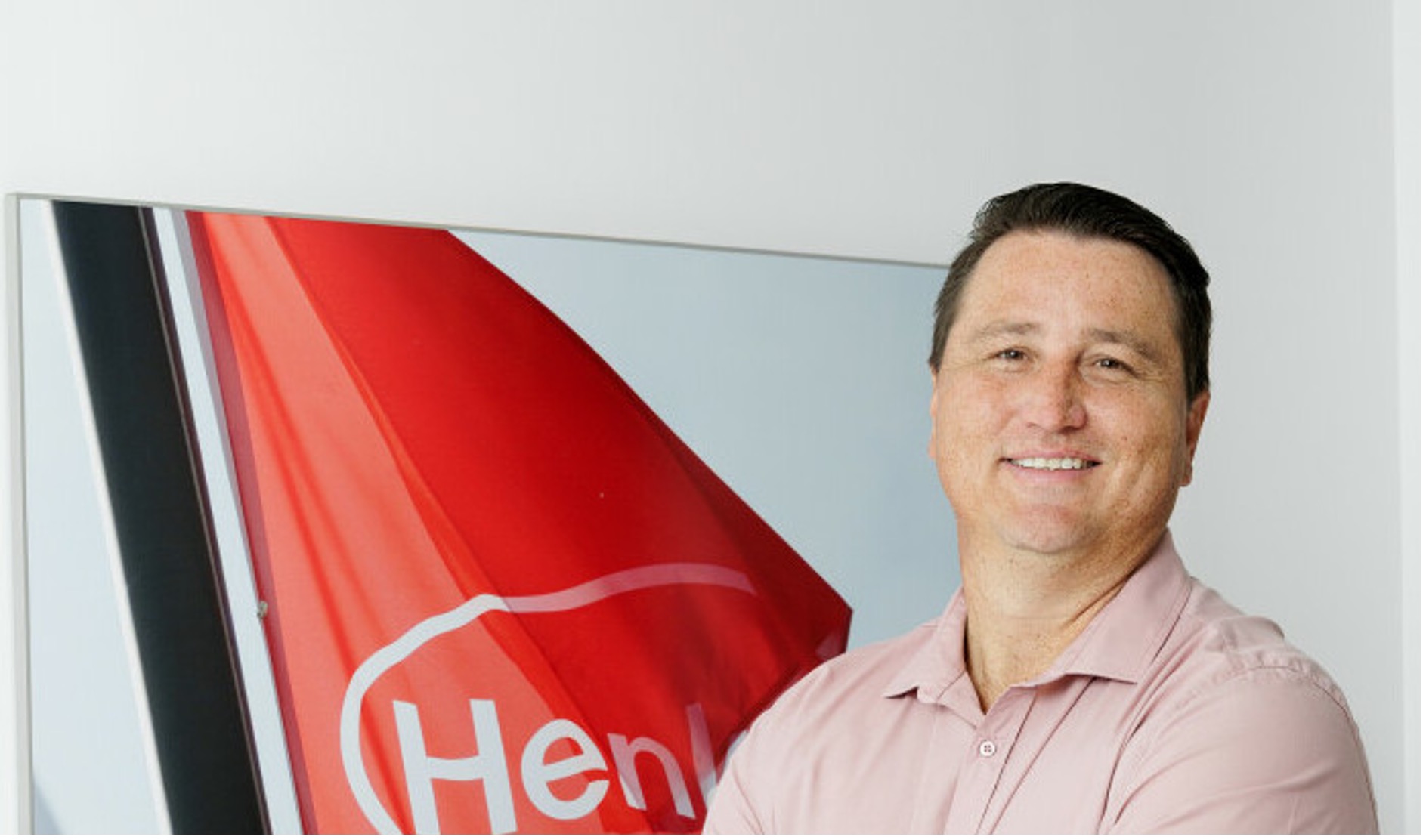
For Ryno Richter, Human Resources cannot operate separately from the commercial realities of the business it serves. It is a personal philosophy shaped by more than a decade working in operationally demanding and highly organised environments, where decisions about people have direct consequences for productivity, costs and business performance.
As Henkel South Africa’s new HR Manager, Richter brings this experience into a global organisation where he sees an opportunity to contribute at a more strategic level.
“What attracted me to Henkel was the combination of the organisation’s strong global footprint, its culture and the opportunity to work in a more international and highly complex environment,” he says.
Richter joins Henkel following almost seven years at SPAR Group, where he served as Senior Human Resources Manager for its Corporate Division. His remit covered approximately 5,500 employees across 210 business units nationally and extended into the financial wellbeing of the business, sustainability, profitability and strategic cost management.
The scale of that responsibility reinforced his belief that people strategy and business strategy are inseparable.
“When you are responsible for thousands of employees across hundreds of business units, even relatively small improvements in productivity, workforce efficiency and employee engagement can have a significant impact on the bottom line.”
Richter intends bringing the same commercial mindset to Henkel, positioning HR as a function that can contribute directly to productivity, cost management, organisational effectiveness and sustainable business performance.
His career across SPAR, Shoprite, Fidelity Cash Solutions and Labournet has also given him extensive experience in industrial relations, labour law, union engagement, organisational change, transformation, governance and workforce planning. It has shaped what he describes as a pragmatic approach to HR leadership – people-focused, and equally grounded in fairness, consistency and commercial reality.
As he settles into Henkel, however, Richter is not arriving with a predetermined list of changes.
“My first priority is to listen and understand,” he says.
Over the next 12 months, he intends to build relationships with leadership, employees and key stakeholders to understand what is working and where HR can make the greatest contribution. Organisational effectiveness, leadership capability, talent and succession, employee engagement and workforce planning will be among his priorities. Longer term, Richter wants to build a stronger internal talent pipeline, particularly at leadership level, with succession planning actively managed rather than addressed only when vacancies arise.
“I would start by understanding what capabilities Henkel will need in the future and then assess whether we currently have those capabilities internally,” he says.
Richter believes strongly in developing talent from within but says this must be supported by proper succession planning, career conversations, development plans and exposure to different parts of the business.
For future leaders, he would also focus on giving people real opportunities to lead, rather than relying only on training courses. “People develop through experience, accountability and being exposed to challenging situations,” he says.
At the same time, Richter believes organisations need to be realistic about capability gaps.
“We need to be honest about where we have gaps and bring in external talent where necessary,” he says. This focus on opportunity extends to transformation. While Employment Equity and BBBEE targets provide important accountability, Richter believes meaningful transformation must go further by developing people, creating access to opportunities and building sustainable and diverse talent pipelines throughout the organisation.
Technology will also increasingly influence Henkel’s future workforce. Richter does not believe the answer is to protect jobs from technology, but to prepare people to work effectively with it.
AI and digitalisation will change many roles, and he believes organisations need to identify which skills will become more important and begin developing those capabilities now.
At the same time, Richter cautions against becoming too technology-focused. The human elements of leadership, judgement, relationships, creativity and problem-solving will remain critical, even as technology becomes more embedded in the workplace.
HR, he says, should therefore help create a culture of continuous learning where employees are encouraged to adapt and develop rather than fear technological change.
Ultimately, his vision is for an organisation where high performance and positive employee experience are not competing priorities but reinforce one another.
“From a business perspective, I want HR to be recognised as a credible, strategic partner that makes a measurable contribution.”
For Richter, success will therefore not be defined by a single HR programme or initiative, but by a stronger business, stronger leaders and people who have been given meaningful opportunities to grow.