
As our global and local economic climate continues to shrink consumers’ discretionary spend in 2026, the South African liquor industry must find ways to protect margins and capture volume. To do so successfully, suppliers need to look beyond basic channel definitions and master the primary drivers shaping the sector and changing shoppers’ purchasing behaviours, such as those highlighted in the latest Trade Intelligence Liquor Retailing Report 2026/2027.
The Corporate Land Grab
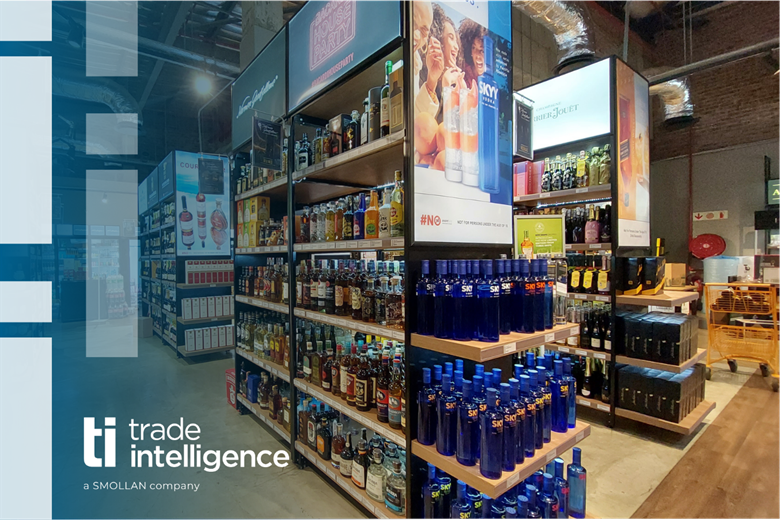
In 2025, the off-trade liquor market (i.e. physical/online stores selling beverages for later consumption off-site) increased +4.2% to R109bn, driven heavily by corporate grocery channels outperforming traditional wholesalers. This evolution is anchored in aggressive estate expansion, with corporate liquor store footprints growing at double the rate of grocery stores, reaching 75% brand saturation across supermarket networks.
Store adjacencyis thus a competitive weapon, creating greater shopper convenience while capturing larger weekend shopping missions. The result is a shift away from fragmented purchasing of liquor products toward increasingly integrated grocery-and-liquor shopping occasions.
“For suppliers, this raises important questions around ranging, cross-category promotions, and whether continued outlet expansion will eventually begin to dilute shopper footfall,” says Caroline Short, Research and Advisory Services Lead at Trade Intelligence. “Getting onto the shelf is not enough – real opportunity lies in creating combined shopping missions across food and liquor, all supported by loyalty programmes.”

Explosive Adoption of Quick-Commerce
Perhaps the biggest disruption is not another retailer, however – it is the smartphone. Shoppers’ demand for convenience has resulted in rapid adoption of quick-commerce (q-commerce) apps and delivery platforms.
Knock-on effects include shoppers moving away from large, planned stock-up trips toward more impulse purchases, i.e. immediate, convenience-driven digital purchases, often triggered by social gatherings and even changes in the weather.
Buying online also leads to a decline in in-store foot traffic, reducing opportunities for in-store brand visibility and shopper engagement. Both these behaviours create challenges and opportunities for manufacturers and retailers alike.
Checkers Sixty60 currently dominates digital liquor purchasing, commanding exceptional reach across beer, spirits and premixes, illustrating how winning online increasingly depends on appearing within broader grocery missions rather than on standalone liquor online platforms. “Digital trade spend must target on-demand delivery app integration and in-app bundle solutions that place products next to routine grocery lines, rather than just relying on standalone digital platforms,” says Short.

The Resilient Tavern
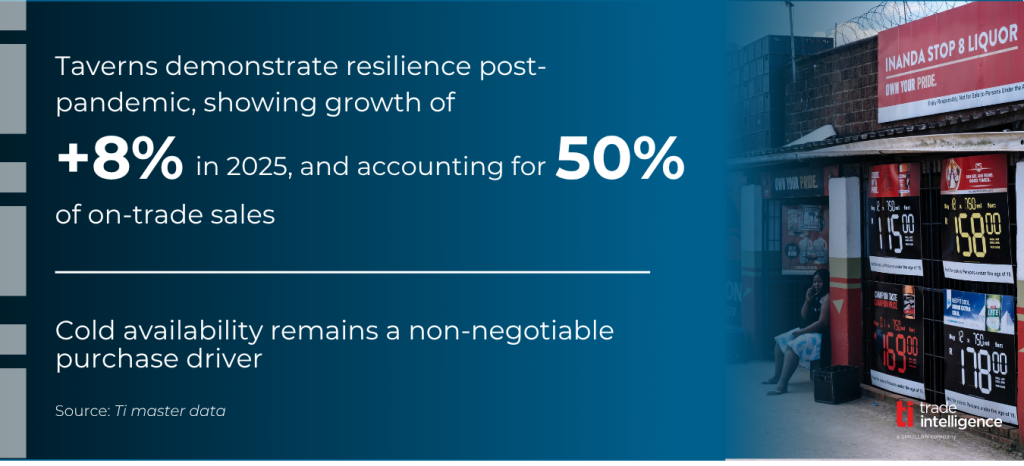
While much of the on-trade (i.e. on-site purchase and consumption) market remains under pressure following the pandemic, taverns demonstrate remarkable resilience, showing growth of +8%1 in 2025 and accounting for 50% of on-trade sales.
Success within taverns, however, depends less on traditional merchandising and more on execution fundamentals. Cold availability remains a non-negotiable purchase driver, with many shoppers prepared to leave the establishment if their preferred brand is not served cold. In this environment, execution often matters more than advertising.
Leaning into the ‘Last Sip’
These channel shifts are occurring alongside broader changes in consumer spending, premiumisation, affordability pressures and evolving shopping behaviour. Understanding how these forces interact requires looking beyond headline market growth and examining how shoppers move between channels, retailers and occasions. The Trade Intelligence Liquor Retailing Report 2026/27 explores these trends in detail, combining market sizing, retailer performance, channel dynamics, and shopper behaviour to identify practical growth opportunities for both suppliers and retailers.