South Africa’s start-up sector risks falling further behind competing African ecosystems unless government moves quickly on regulatory and capital-access reforms, according to new research published this week by SiMODiSA, a private sector-led entrepreneurship advocacy body, in partnership with Allan & Gill Gray Philanthropy.
The study, which feeds into the ongoing campaign for a dedicated South African Start-up Act, estimates fresh early-stage venture capital in the country at R3.3bn for 2024. That figure closely tracks official industry data: the Southern African Venture Capital and Private Equity Association recorded R3.29bn deployed to start-ups the same year, split between R2.62bn in equity and R670m in debt, across a record 222 investment rounds into 110 companies. Despite that record activity, the report concludes most South African start-ups remain self-funded or informally capitalised, with venture capital reaching only a small minority of firms.
READ – Pan-African VC Firm Gains Backing for Female-Focused Tech Startups
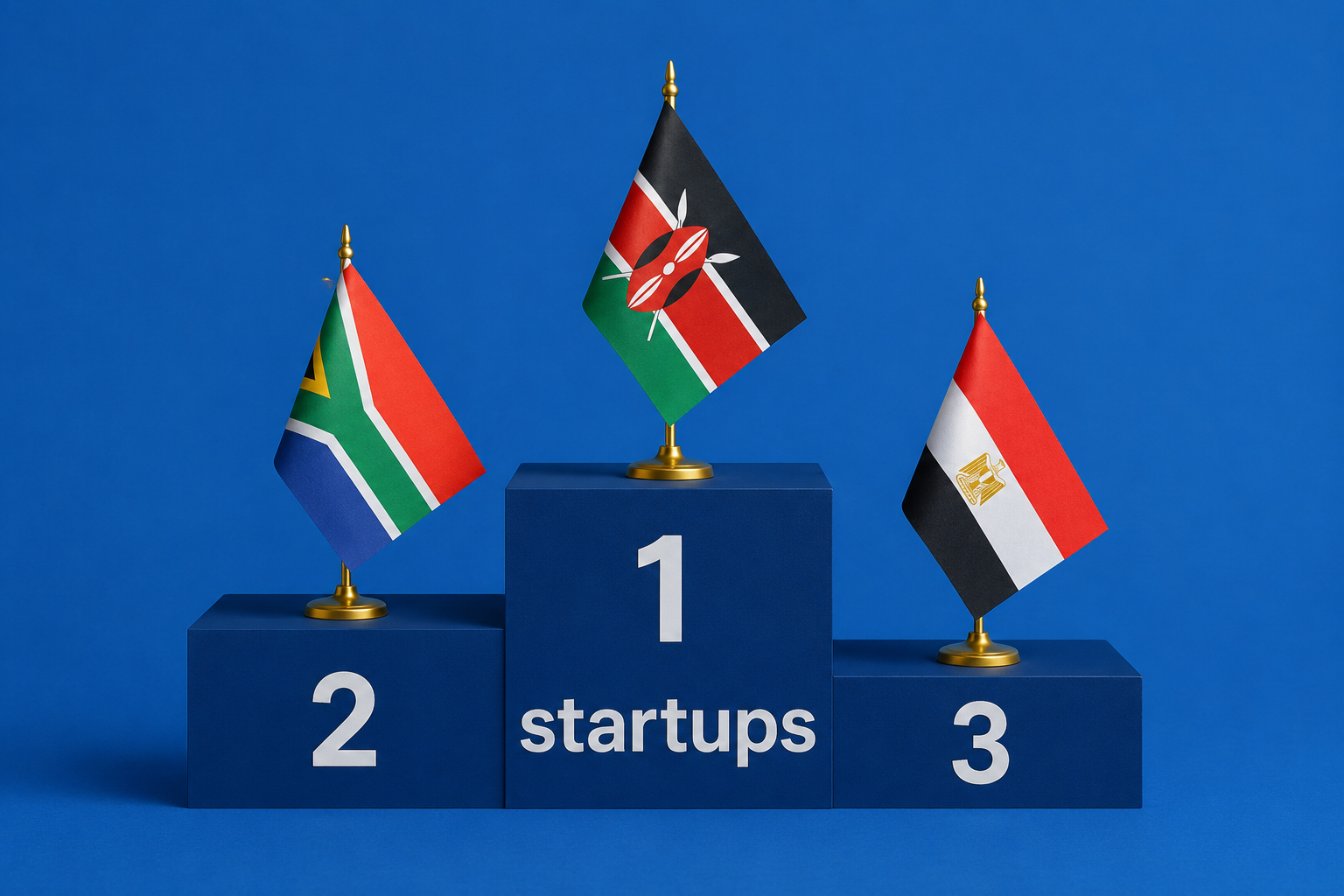
By the report’s measure, South Africa’s start-up ecosystem grew 19.5% over the period reviewed, against 22% in Egypt and 33.5% in Kenya. That comparison sits awkwardly alongside StartupBlink’s separate Global Start-up Ecosystem Index, published in May, which found South Africa is in fact Africa’s highest-ranked ecosystem overall, placing 52nd globally on 31.3% growth, while Kenya’s momentum has since stalled to near zero and Nairobi slipped nine places to 116th. The divergence reflects differing methodologies rather than a settled picture, but the underlying message from both is consistent: growth rates across the region are volatile, and South Africa cannot assume its lead is secure.
At city level, Cape Town climbed 24 places to 114th globally this year, third in Africa behind Lagos, on 70th, and Cairo, on 99th, and ahead of Johannesburg at 122nd. South Africa’s sole unicorn remains TymeBank, the Johannesburg-founded digital bank that passed a $1bn valuation in 2024, Africa’s ninth. By contrast, Nigeria, buoyed by its 2022 Start-up Act, now counts several fintech unicorns and leads the continent in start-up ecosystem value.
The SiMODiSA report identifies regulatory complexity, administrative delays, compliance costs, constrained international capital flows, talent and visa barriers, and fragmented support programmes as the principal obstacles facing South African founders. It notes the country lags well behind leading ecosystems on capital mobility, founder visas and targeted incentives, and argues that venture capital alone cannot solve the problem, calling instead for broader blended-finance mechanisms to support founders at each stage of growth.
READ – Why 70% of African Startups Fail in the First 5 Years
South Africa has no enacted, dedicated start-up legislation. The African Union adopted a continental start-up policy framework and model law in 2024, intended to help member states build uniform, enabling regulatory environments; Nigeria’s earlier Start-up Act is frequently cited as a template that gave its fintech sector regulatory clarity and helped attract capital. The SA Start-up Act Movement, led by SiMODiSA, wants comparable domestic legislation, alongside simplified market access, exchange control reform, stronger co-investment and fund-of-funds mechanisms, and greater private-sector-led capital mobilisation.
SiMODiSA policy lead Shelley Lotz said the constraint was not entrepreneurial ambition but the absence of a policy environment robust enough to let that ambition scale, arguing that incremental support measures were no longer sufficient and that reform needed to become a national economic priority if start-ups are to create jobs, attract investment and compete internationally.
The report draws a distinction between support for scalable, technology-enabled start-ups capable of reaching global capital and markets, and broader entrepreneurship activation aimed at small business survival. Both matter, it says, but conflating the two in policy design risks under-serving the high-growth firms best placed to contribute meaningfully to innovation, job creation and tax revenue.
READ – Meta’s Llama Impact Grant Awards South African Startups
| Ecosystem Snapshot (StartupBlink 2026) | Global Rank | Growth Rate | Notable Feature |
|---|---|---|---|
| South Africa | 52nd (Africa’s highest) | 31.3% | Sole unicorn: TymeBank ($1bn+, 2024) |
| Nigeria | 62nd | 31.8% | 2022 Start-up Act; leads Africa in ecosystem value |
| Kenya | 61st | 0.2% (down from 33.5%) | Momentum stalled; still 2nd in Africa |
| Egypt | 65th | 4.7% | New Start-up Charter, 2026; $1bn financing pledge |
| Cape Town (city) | 114th | 39% | 3rd-ranked African city |
| Johannesburg (city) | 122nd | 8.8% | Behind Cape Town for first time |