The City of Johannesburg has tabled a R97.1 billion budget for the 2026/27 financial year, delivering above-inflation tariff increases across electricity, water, and waste removal at a moment when the metro’s financial position is deteriorating and its relationship with national government and its primary creditor, Eskom, remains precarious.
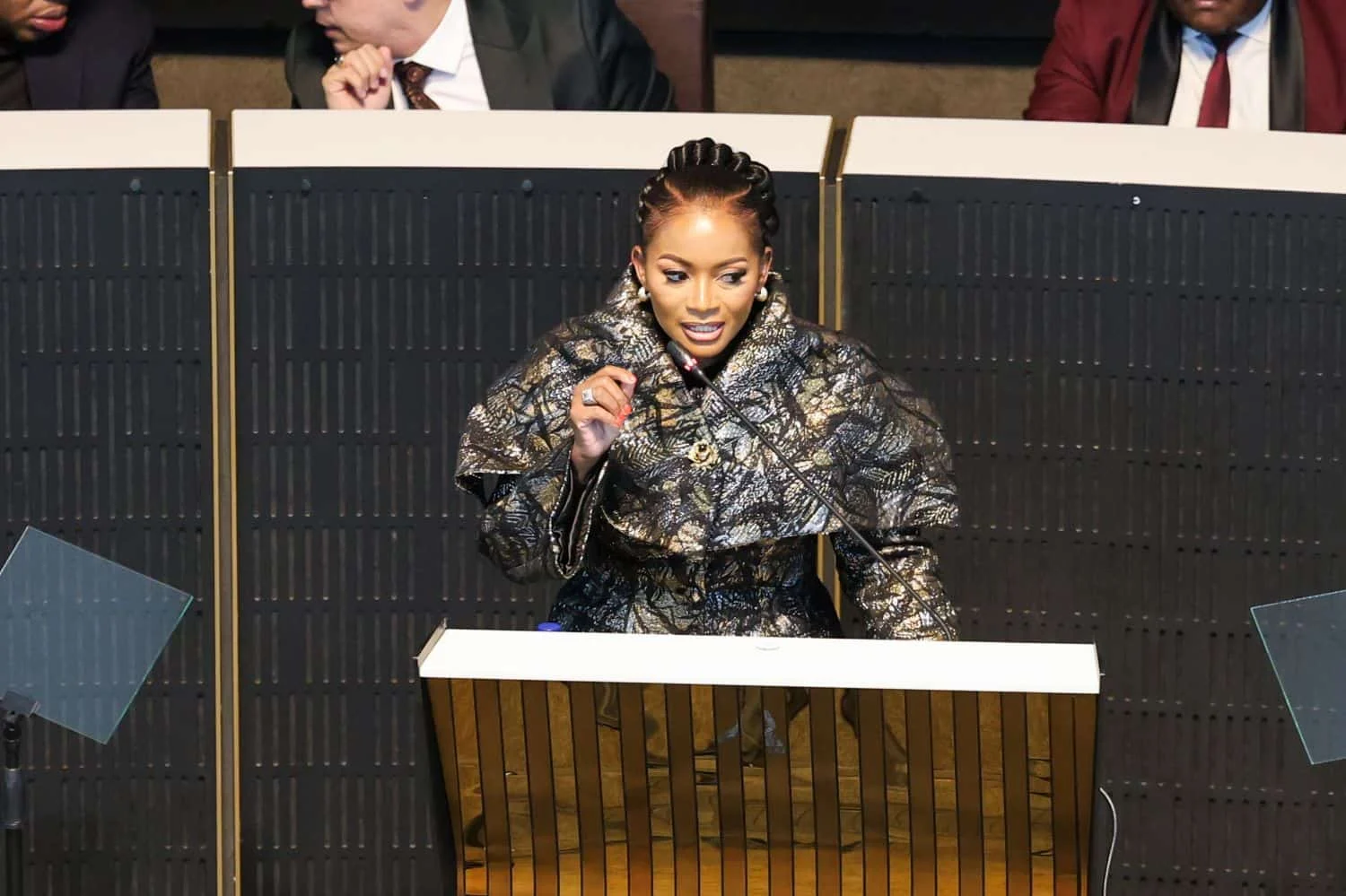
Finance MMC Loyiso Masuku presented the budget at the Connie Bapela Council Chamber on 27 May, framing the document as the foundation of a structured financial turnaround rather than a routine annual exercise. The numbers, however, reflect a municipality under acute strain. City Power’s tariff increases by 9.01%, Johannesburg Water’s tariffs rise in response to an 11% bulk purchase cost increase from Rand Water, and Pikitup’s waste removal charges increase by 6.2%. Property rates rise by 3.6%.
For most Johannesburg households, these increases arrive against a backdrop of persistent load disruptions, ageing water infrastructure, and unreliable waste collection — services that have degraded even as tariffs have risen. The city retains several relief measures: the first R300,000 of residential property value remains exempt from rates, pensioners whose gross monthly household income falls below R13,519 and whose property is valued at up to R1.5 million receive a full rates rebate, and every household continues to receive the first six kilolitres of water free of charge. Indigent households registered on the expanded social package receive 15 kilolitres of free water and 50 kilowatt-hours of free electricity monthly. More than 145,000 households are now registered on that programme, up from 124,000 in 2015.
READ – Eskom Quietly Switches Off Joburg’s Streetlights Over R4.1m City Power Debt
The budget’s operating revenue is projected at R90.4 billion against operating expenditure of R88.3 billion, producing a projected surplus of R2.1 billion before taxation and capital grants. The capital budget stands at R8.8 billion for the coming financial year, rising to R25.3 billion over the medium term.
The revenue projection carries significant risk. Masuku disclosed that the city’s projected collection rate has been revised downward from 88.6% to 86%, following benchmarking with National Treasury and a reassessment based on historical performance. Every percentage point of collection shortfall translates directly into reduced capacity to fund operations, service debt, and maintain infrastructure. Masuku acknowledged the core problem plainly: revenue lost through illegal connections, meter tampering, billing failures, non-payment, and water losses is revenue that cannot be redirected to repair and maintain the city.
The infrastructure position is severe. Non-revenue water losses — water that enters the distribution network but never reaches a paying customer — exceed 40%. Electricity distribution losses stand at 27%. The combined infrastructure renewal backlog across Johannesburg Water, City Power, and the Johannesburg Roads Agency exceeds R185 billion. These are not new problems. Infrastructure analysts and municipal finance specialists have tracked Johannesburg’s maintenance deficit for over a decade, noting that deferred capital investment compounds over time: a pipe not repaired becomes a burst main, a substation not upgraded becomes a supply failure, and a road not resurfaced becomes a collapse requiring emergency expenditure at multiples of the original maintenance cost.
The budget is being tabled in a context of compounding institutional pressures. Global Credit Rating revised the city’s outlook to rating watch negative in April, citing delays in finalising annual financial statements. Finance Minister Enoch Godongwana threatened in recent weeks to withhold the city’s R8 billion equitable share instalment due in July unless Mayor Dada Morero reversed a R10.3 billion wage agreement concluded with municipal workers without adequate budget provision — a commitment that, if honoured, would consume a material share of the city’s operating headroom. That warning followed an earlier letter from Godongwana, issued less than nine months ago, demanding a credible plan to address the metro’s accumulation of unauthorised, irregular, fruitless, and wasteful expenditure.
Eskom’s position adds a further layer of urgency. The power utility served formal notice on the metro and City Power of its intention to reduce or terminate electricity supply to bulk supply points unless the R5.3 billion debt — plus a current account balance of R1.6 billion — is addressed. Electricity and Energy Minister Kgosientsho Ramokgopa announced on 27 May that, from 1 July 2026, City Power’s electricity revenue will be ring-fenced and channelled directly to Eskom. That arrangement effectively places a portion of the city’s revenue flows under supervised disbursement — a structural intervention with few precedents at metropolitan level.
Masuku’s response is a six-pillar turnaround framework covering financial recovery, revenue enhancement, expenditure containment, creditor and liquidity reform, governance and compliance, and labour stability. The city is also a candidate beneficiary of the National Treasury’s Metro Trading Services Reform initiative — a R54 billion performance-based incentive programme that provides capital to repair water, electricity, and waste management infrastructure, conditional on metros ring-fencing trading services revenue within professionally governed utilities.
The departmental allocations reflect the scale of the service delivery challenge. City Power receives R28.3 billion in operating expenditure, Johannesburg Water R21.5 billion, Pikitup R5.2 billion, and roads and stormwater R1.8 billion with a further R570 million in capital investment. The metro police department is allocated R7.2 billion and the social development budget stands at R409.8 million.
With local government elections scheduled for 4 November 2026, the budget is as much a political document as a financial one. Masuku’s closing remarks — that residents are less concerned with political contestation than with functioning taps, working streetlights, and economic opportunity for their children — frames the stakes clearly. Whether the turnaround framework can translate into measurable service improvement before polling day will be one of the defining questions of Johannesburg’s political cycle.