
Close Menu
    • ABOUT
    • BOOK STORE
    • ENTREPRENEURSHIP
    • ESG
    • EVENTS & AWARDS
    • POLITICS
    • GADGETS
    • CONTACT
    Facebook X (Twitter) Instagram
    Facebook X (Twitter) LinkedIn
    Business explainerBusiness explainer
    Subscribe
    • TRENDING
    • EXECUTIVES
    • COMPANIES
    • STARTUPS
    • GLOBAL
    • AGRICULTURE
    • DEALS
    • ECONOMY
    • MOTORING
    • TECHNOLOGY
    Business explainerBusiness explainer
    Home » Approaching Equity Investing During High Geopolitical and Stagflation Risks
    ECONOMY

    Approaching Equity Investing During High Geopolitical and Stagflation Risks

    April 23, 2026
    Facebook Twitter LinkedIn Telegram Pinterest Tumblr Reddit WhatsApp Email
    Duncan Lamont, CFA, Head of Strategic Research at Schroders
    Share
    Facebook Twitter LinkedIn Pinterest Email

    Despite the recent rally, recent heightened geopolitical risk and a soaring oil price have broadly caused global equities to sell off. 

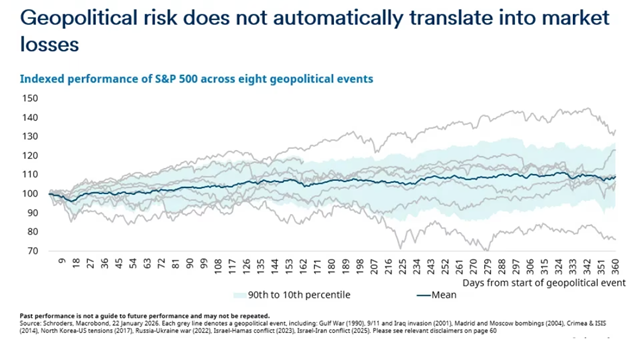
    That said, historically, geopolitical risk does not automatically translate into market losses.
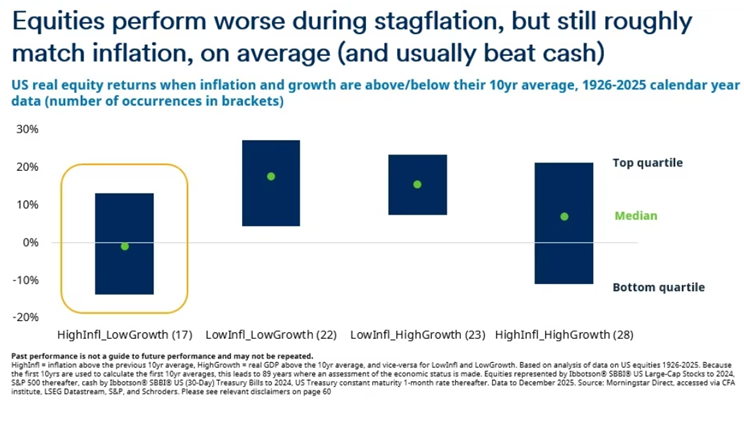
    Rising energy prices increase the risk of stagflation (high inflation/low growth)

    Over the past 100 years, stagflation has been a challenging environment for equities. But, while the market noise can be difficult to stomach, equity performance during stagflationary periods have roughly matched inflation on average and usually beaten cash.
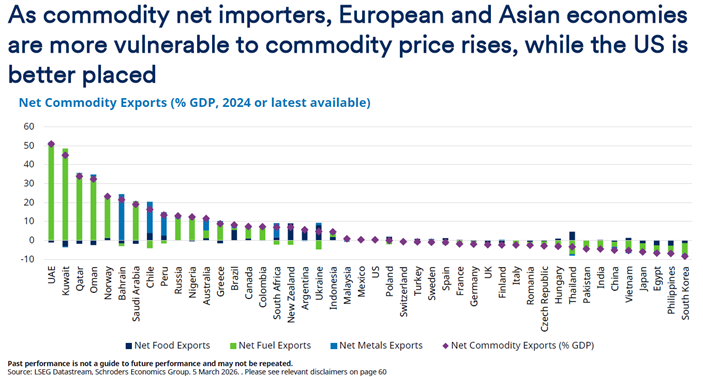
    Commodity importers will feel the squeeze

    On an economic basis, as commodity net importers, European, Asian and some emerging market economies (like South Africa) are more vulnerable to commodity price rises. The US, however is more insulated in this respect.
    Sectoral and regional insights 

    On a sectoral basis, the UK equity market is notably overweight defensive sectors such as energy, consumer staples, healthcare and utilities, which have historically performed relatively well during periods of sharp oil price increases. By contrast, Japan and emerging markets have more challenging sector exposures, while the US and Europe also show vulnerabilities during energy price shocks. 

    Market dispersion has increased meaningfully, with a rising proportion of countries and companies outperforming the broader market. This reflects a shift away from highly concentrated leadership, particularly in developed markets. Emerging market equities are an exception, however, where performance remains heavily concentrated in a small number of mega‑cap stocks.

    Value equities stand out as having a low correlation with AI‑related stocks and have delivered materially better outcomes during periods when AI stocks have sold off. Importantly, many passive approaches to value investing still retain significant exposure to large technology names, limiting their effectiveness as a hedge against AI‑related risk.

    Long‑term lessons from equity market history

    Historical analysis shows us that market declines of more than 10% occur in more years than not, while 20% drawdowns have historically happened roughly once every four years. On average, markets experience an intra‑year fall of around 15% alongside a rise of approximately 23%. 
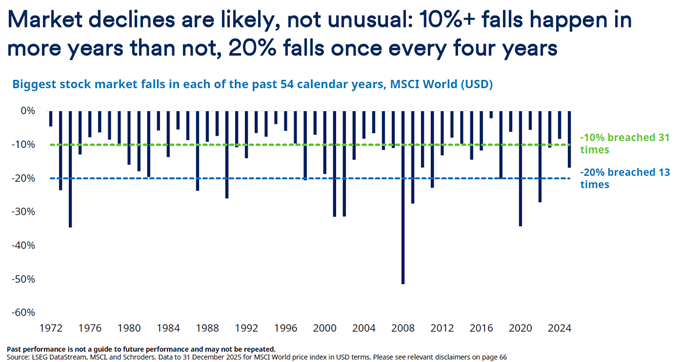
    Although periods of heightened volatility can feel unsettling, exiting markets during these episodes has historically been damaging to long‑term wealth outcomes. Equity investing can be particularly uncomfortable in the short term, but equities have proven less risky than cash when assessed by their ability to deliver inflation‑beating returns over time. Ultimately, there is always a reason for concern, but over the long run, equities have outperformed bonds, which in turn have outperformed cash.

    Written by Duncan Lamont, CFA, Head of Strategic Research at Schroders

    Share. Facebook Twitter Pinterest LinkedIn Tumblr Telegram Email
    Previous ArticleAI Prompting and the Upstream Shift for Editors
    Next Article Secha Capital and E Squared Join Forces on Execution Capital in South Africa

    Related Posts

    Building South Africa’s Digital Future: Infrastructure, Skills, and the AI opportunity

    April 23, 2026

    AI Prompting and the Upstream Shift for Editors

    April 23, 2026

    The Impact of Ten Years of Decline on South Africa’s Construction Risk Landscape

    April 23, 2026
    Top Posts

    Seven Families Sue OpenAI In ChatGPT Suicide Scandal

    November 10, 2025

    Volkswagen Chief Praises Chinese Competition for Sparking Innovation

    November 7, 2025

    WomenIN Festival 2025 – Limitless: No Labels, No Limits, No Apologies

    November 9, 2025

    Nersa Opens Public Consultation on Eskom’s New Tariff Calculation 

    October 24, 2025
    Don't Miss

    Building South Africa’s Digital Future: Infrastructure, Skills, and the AI opportunity

    OPINION

    President Ramaphosa’s announcement at the 2026 State of the Nation Address of a R50 billion…

    DP World Launches New Brazil–Africa Trade Route Connecting High-Growth Markets

    April 23, 2026

    British International Investment Sets £9 Billion Goal for Africa, Emphasising Frontier Markets

    April 23, 2026

    SNG Grant Thornton Names Dire as CEO

    April 23, 2026
    Stay In Touch
    • Twitter
    • LinkedIn
    • Facebook

    Business Explainer proudly displays the “FAIR” stamp of the Press Council of South Africa, indicating our commitment to adhere to the Code of Ethics for Print and online media which prescribes that our reportage is truthful, accurate and fair. Should you wish to lodge a complaint about our news coverage, please lodge a complaint on the Press Council’s website, www.presscouncil.org.za or email the complaint to khanyim@presscouncilsa.org.za Contact the Press Council on 011 4843612.

    Facebook X (Twitter) LinkedIn
    Categories
    • TRENDING
    • EXECUTIVES
    • COMPANIES
    • STARTUPS
    • GLOBAL
    • AGRICULTURE
    • DEALS
    • ECONOMY
    • MOTORING
    • TECHNOLOGY
    contact us
    • Get In Touch
    © 2026 Business Explainer
    • Privacy Policy

    Type above and press Enter to search. Press Esc to cancel.