
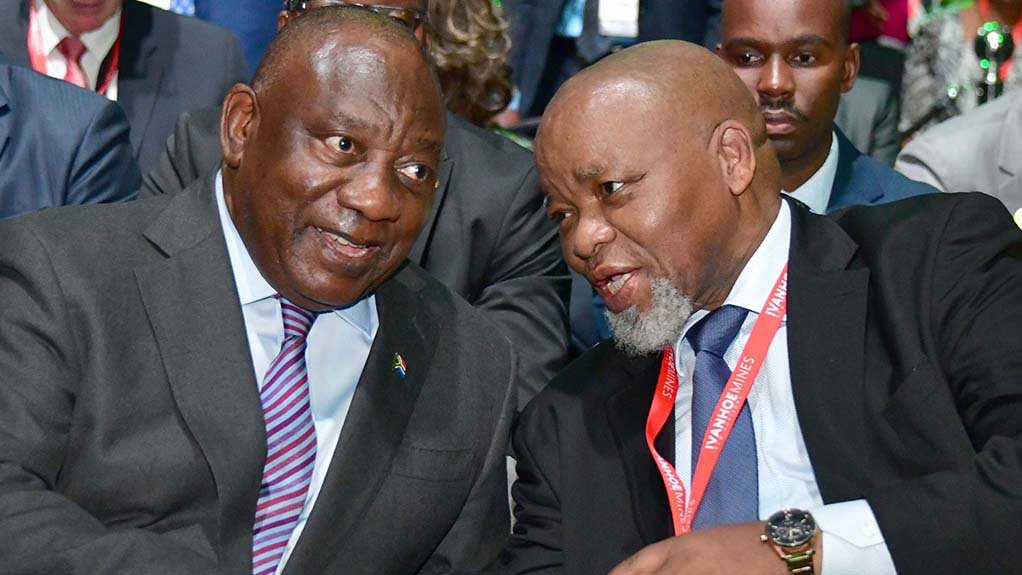
President Cyril Ramaphosa has established a ministerial task team to coordinate the government’s response to a severe fuel price shock triggered by the escalating military conflict involving the United States, Israel and Iran. The team, chaired by Mineral and Petroleum Resources Minister Gwede Mantashe, includes the ministers of finance, transport, trade, industry and competition, international relations, agriculture, electricity and energy, forestry and the environment, as well as the presidency. According to Minister in the Presidency Khumbudzo Ntshavheni, the intervention is structured across short-, medium- and long-term timeframes, with the task team already recommending an immediate reduction in the fuel levy to cushion consumers from the sharp price increases that took effect on 1 April .
The temporary relief measure reduces the general fuel levy by R3 per litre for one month, from R4.10 to R1.10 for petrol and from R3.93 to R0.93 for diesel. The National Treasury estimates the foregone tax revenue at approximately R6 billion for the month, with the measure designed to be fiscally neutral through recovery mechanisms within the 2026 budget framework. Despite the levy cut, petrol prices still rose by R3.06 per litre, while diesel increased by between R7.37 and R7.51 per litre. Illuminating paraffin, which did not benefit from the levy reduction, surged by R11.67 per litre, placing additional strain on low-income households that depend on it for cooking and lighting .
The crisis stems from the near-closure of the Strait of Hormuz, a chokepoint through which approximately 20% of the world’s oil supply and liquefied natural gas passes. Global oil prices have climbed above US$100 per barrel, with Brent crude trading at US$112.57 and West Texas Intermediate at US$99.64 by late March. The International Energy Agency has described the disruption as the largest supply shock in the history of the global oil market. Macquarie Group has estimated that if the conflict continues into June and keeps the strait effectively closed, oil prices could surge to an unprecedented US$200 per barrel, assigning a 40% probability to that scenario .
READ – South Africa in Talks to Secure Alternative Fuel Supply
Ntshavheni moved to reassure South Africans that fuel supplies remain stable, attributing dry fuel stations to logistics constraints caused by panic buying and fuel hoarding. She confirmed that South Africa’s crude oil is sourced from Angola and Nigeria, not the Middle East, though a substantial portion of refined products comes from the Gulf region. The country’s refining capacity currently meets only about 40% of domestic fuel needs, with the remaining 60% imported as finished product. Minister Mantashe has previously stated that South Africa holds approximately eight million barrels of crude oil in its strategic fuel stock and that supply is secured through to the end of April .
The task team is also examining the broader impact on food security, given that the war has disrupted fertiliser supply chains. The destruction of major refineries in the Middle East means that even a cessation of hostilities would require significant lead time to rebuild capacity. Ntshavheni acknowledged that the closure of three domestic refineries in recent years had not been addressed swiftly enough, and that restoring local refining capacity is now a medium- to long-term priority. She argued that as the continent’s leading economy, South Africa has a responsibility to develop reliable refining capacity not only for itself but for the region and the continent as a whole .
The government has discouraged panic buying and warned that illegal fuel price hikes by retailers will be investigated, with plans to publish a dedicated complaints hotline. Consumers have been asked to provide proof of any overcharging above regulated prices. The task team’s mandate includes monitoring the cost-of-living implications and developing a structured set of interventions that can be deployed as the situation evolves. Cabinet has also called for an immediate ceasefire in the conflict, which it said was negatively affecting the Middle East and the world
READ – Stay Home, Save Fuel: Mantashe’s Department Offers Cold Comfort Ahead of April Price Shock