At a time when South Africa is under increasing pressure to convert research into tangible economic value, one university is demonstrating what it looks like when innovation moves beyond theory and into real-world application.
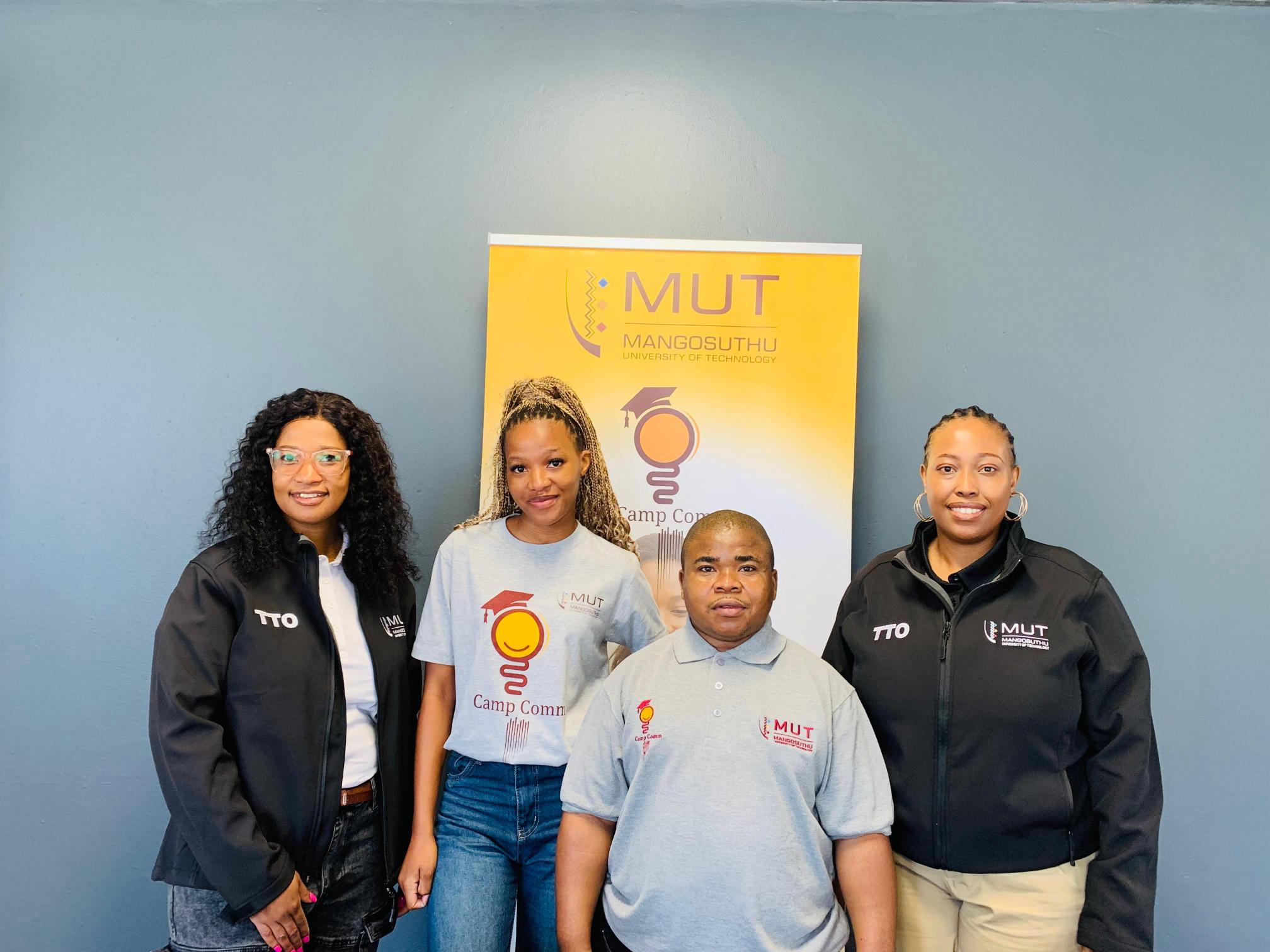
At the centre of this shift is Camp Comm, a locally developed digital platform born out of a clear and persistent gap – the inability of institutions and event organisers to effectively manage communication, participation and real-time engagement at scale. What began as an internal response to fragmented stakeholder coordination has evolved into a broader commercialisation pathway, supported by an initial R650 000 investment from the Technology Innovation Agency (TIA) Seed Fund.
The platform’s early application focused on Technical and Vocational Education and Training (TVET) colleges, private institutions and universities, where it was used to digitally manage student attendance and improve coordination. Its evolution has since expanded into the events economy, with applications across conferences, exhibitions and large-scale institutional gatherings.
“Camp Comm was developed to address a very practical problem: the disconnect between planning and real-time execution in complex environments,” says Mr Rogerant Tshibangu, lecturer in the department of Electrical Engineering. “What we identified early on was that existing systems were not designed for the realities on the ground. Our approach has been to build a platform that responds directly to user needs, enabling better coordination, communication and ultimately better outcomes.”
The platform has already been deployed within Mangosuthu University of Technology (MUT), including within the Faculty of Engineering, and has supported high-profile engagements such as the 16th and 17th WIPO South Africa Summer School, as well as institutional events and competitions. While exact user figures are still being consolidated, its consistent application across multiple environments signals both relevance and scalability.
Camp Comm forms part of a broader portfolio of locally developed technologies housed within MUT’s patent pipeline, each addressing critical national and global challenges.
Among these is an organic herbicide, developed in response to the environmental and health risks associated with glyphosate-based chemicals, which are already banned in more than 20 countries. The solution uses naturally derived compounds to disrupt plant growth processes without the toxic side effects linked to conventional herbicides.
In the built environment, a “ceiling in a can” innovation offers a cost-effective and transport-efficient solution for low-cost housing. Using expandable polyurethane foam, the system allows ceilings to be installed directly on-site, improving insulation, reducing energy loss and enhancing living conditions in underserved communities.
The university is also advancing a wave energy harvesting system, designed to convert ocean wave motion into electricity and mechanical energy. By combining kinetic and potential energy capture, the system presents a renewable energy solution with applications for coastal infrastructure and off-grid environments.
In the healthcare space, researchers are developing targeted cancer treatments that inhibit key enzymes responsible for hormone-dependent cancers. These non-steroidal compounds are designed to improve treatment specificity and efficacy, particularly for prostate and breast cancers.
“These innovations are not theoretical concepts. They are practical, scalable solutions designed to respond to real challenges in our society,” says Dr Mandla Hlongwane, Deputy Director of the Technology Transfer Office (TTO). “What is critical now is building the bridge between invention and industry adoption.”
This transition is being supported through the university’s Technology Transfer Office (TTO), established under the leadership of Dr Hlongwane. The TTO plays a central role in identifying commercial partners, facilitating technology transfer and enabling the creation of spin-out entities to take innovations to market.
The long-term strategy is clear: to move beyond pilot projects and into sustainable commercial models, including tailored subscription offerings for platforms like Camp Comm and industry partnerships for product-based innovations.
“Universities are the source of knowledge and innovation, but they cannot operate in isolation,” adds Dr Mandla Hlongwane. “If we are serious about economic growth and job creation, industry must actively partner with institutions to scale these solutions. Local innovation must be supported, adopted and integrated into the economy if we are to see meaningful impact.”
As South Africa continues to position innovation as a driver of economic renewal, initiatives such as these offer a clear blueprint: start with real problems, build practical solutions, and create pathways that connect research to markets, capital and implementation.
The question is no longer whether the country can innovate but whether it can successfully commercialise its ideas at scale.